
Sniffing out hunger: a nose-to-brain connection linked to appetite

Researchers at the Max Planck Institute find specific nerve cells in mice that regulate appetite through smell.
Even bumble bee queens need personal days, too
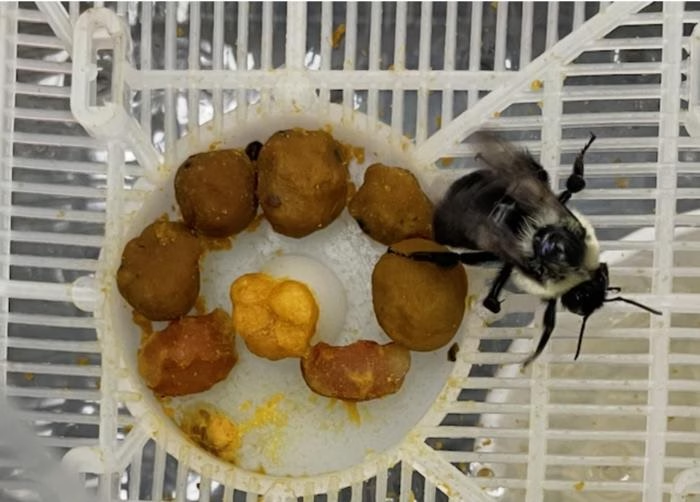
UC Riverside study finds queens pause egg-laying to conserve energy, ensuring colony survival during vulnerable early days.
Methanol poisoning could be easily detected with a ‘breathalyzer’ sensor
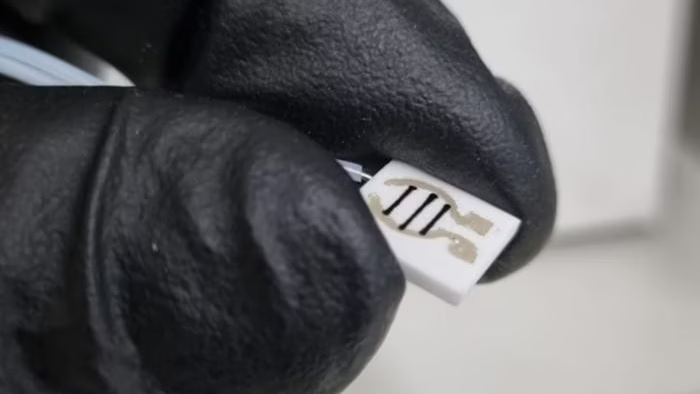
University of Adelaide researchers develop innovative sensor using graphene, detecting methanol at 50 parts per billion.
Locations of treats are stored in specialized neural maps
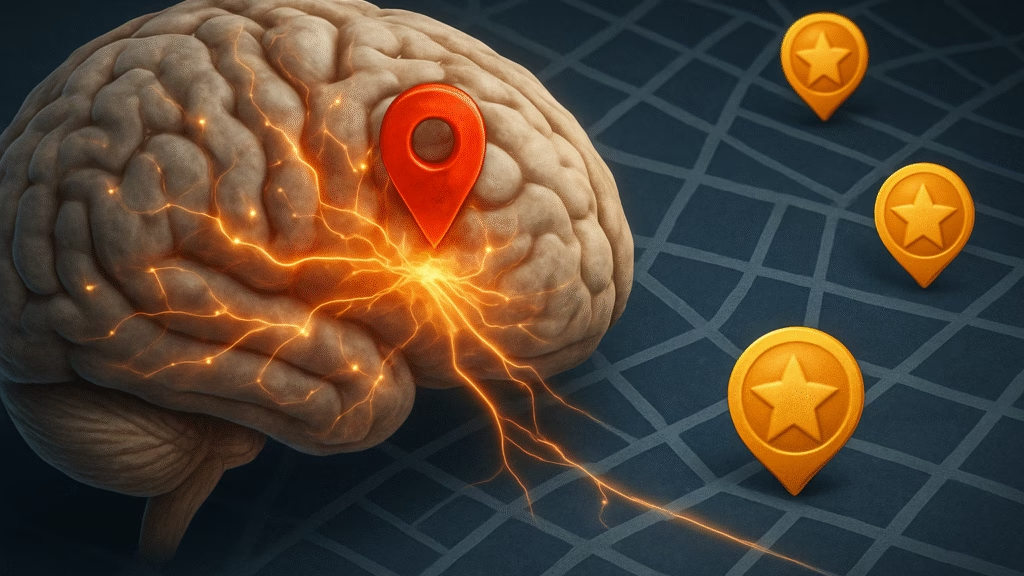
Stanford University researchers find adaptable neural maps in mice, revealing insights into dementia and addiction behaviours.
First-of-its-kind technology helps man with ALS ‘speak’ in real time
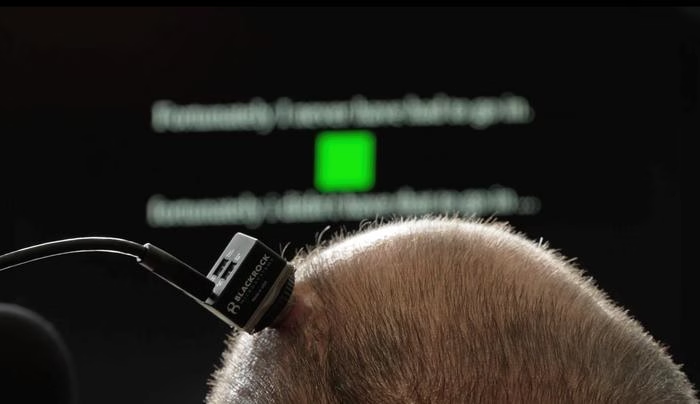
University of California, Davis researchers develop brain-computer interface allowing ALS patient to communicate with expressive intonation.
World’s first non-silicon 2D computer developed

Researchers at Penn State unveil groundbreaking 2D CMOS computer, utilising atom-thick materials for enhanced efficiency.
How the brain solves complicated problems
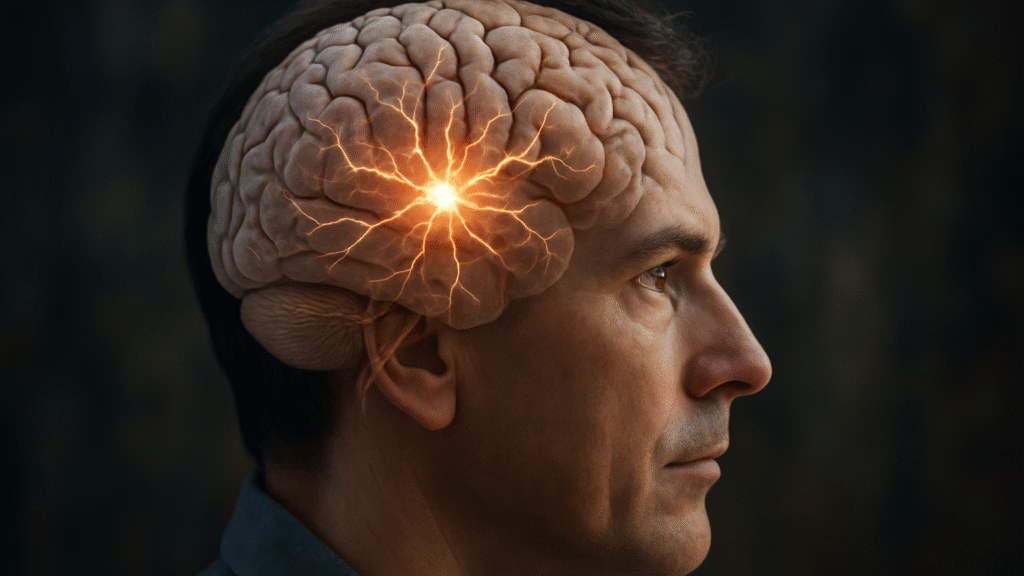
MIT researchers uncover how humans use hierarchical and counterfactual reasoning strategies to navigate complex mental tasks.
Ultrasound scanning robotic arm with adjustable constant contact force
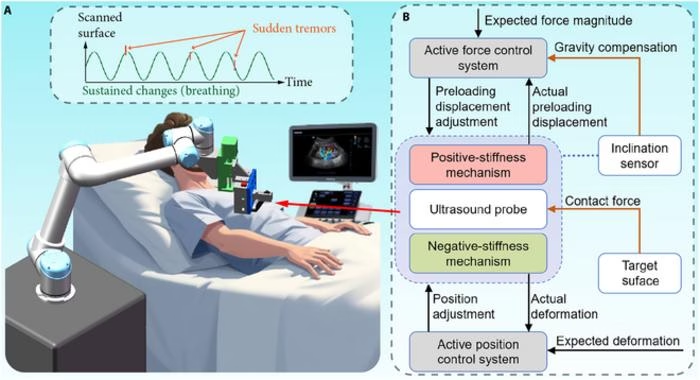
University of Macau’s innovative system enhances diagnostic imaging by stabilising contact force amidst physiological fluctuations.
Understanding the mechanisms of embryonic cell behaviour
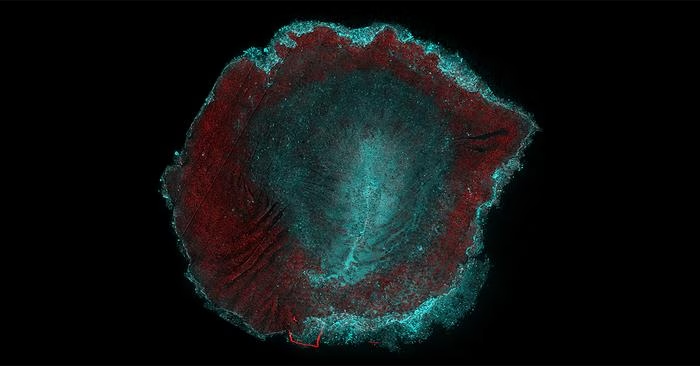
University of California – San Diego reveals avian embryos use modular mechanisms to control size and shape.
Rings of time: unearthing climate secrets from ancient trees

Florida Atlantic University reveals ancient bald cypress trees’ growth patterns, highlighting climate impacts over 1,500 years.