
University of California – San Diego reveals avian embryos use modular mechanisms to control size and shape.
From University of California – San Diego 12/06/25 (first released 09/06/25)
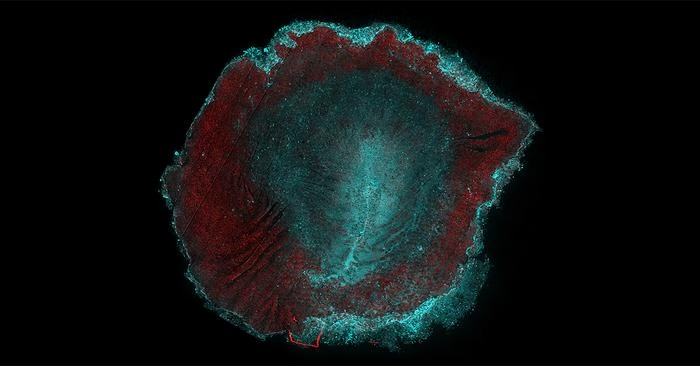
During embryonic development, thousands of cells divide and move collectively to sculpt the main body axes.
Understanding the mechanisms that coordinate this collective behavior remains a significant challenge in biology and the physics of living systems, but a better understanding could have implications in health and science, from medicine to biomaterials.
Now researchers have discovered that avian embryos — established models for studying human development — control their size and shape using modular, independent physical mechanisms.
Clarifying the modular mechanisms that regulate the emergent embryo geometry (size and shape) helps further our understanding of the evolutionary plasticity of natural embryos and suggests strategies for engineering synthetic ones.
The study, published June 4, 2025 in Nature Communications, was led by UC San Diego researchers Alex Plum and Mattia Serra, along with Guillermo Serrano Najera and Ben Steventon (both University of Cambridge) and Kees Weijer (University of Dundee).
Their research was funded by the National Sciences Foundation (NSF PHY-2413073 and NSF CAREER PHY-2443851).
More info
You may also be curious about:
-

‘Space archaeology’ reveals first dynamic history of a giant spiral galaxy
-
Thousands of pico-satellites may transform how phones connect to space
-

Barcelona’s Low Emission Zone reduces NO₂ levels
-
Neuroadaptive VR treatment for arachnophobia
-
The freshwater hidden beneath the Great Salt Lake
-

Moby Dick ‘ship sinking’ sperm whales caught headbutting on camera
-

Changing shower and toilet habits could help close England’s 5 billion litre water gap, Surrey-led research finds
-

Is your brain aging faster than you are? Sleep may hold the key
-
Initial tests find lead in children’s fast-fashion clothing
-
Aquatic plant reduces antibiotics in water and genetic damage in fish
-

When the Earth moved
-

Turning sawdust into fire-resistant, eco-friendly materials using watermelon seeds