
What the human brain can do that AI can’t
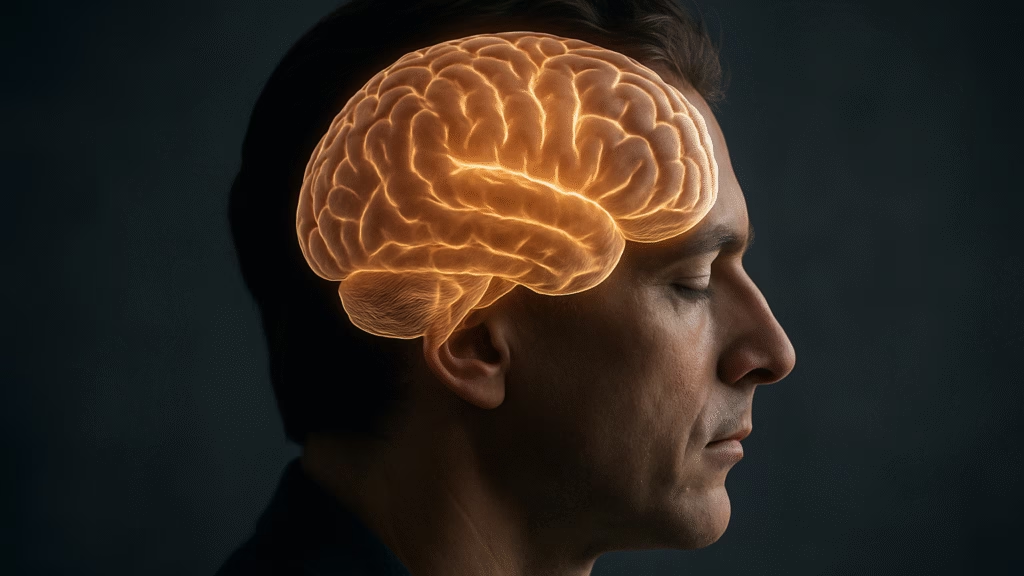
University of Amsterdam researchers reveal unique brain activations, showing AI’s limitations in understanding action opportunities.
Koalas set to benefit from new genetic screening tool

University of Queensland researchers develop tool to improve koala genetic diversity, aiding conservation of endangered populations.
Potential anti-breast cancer drug identified
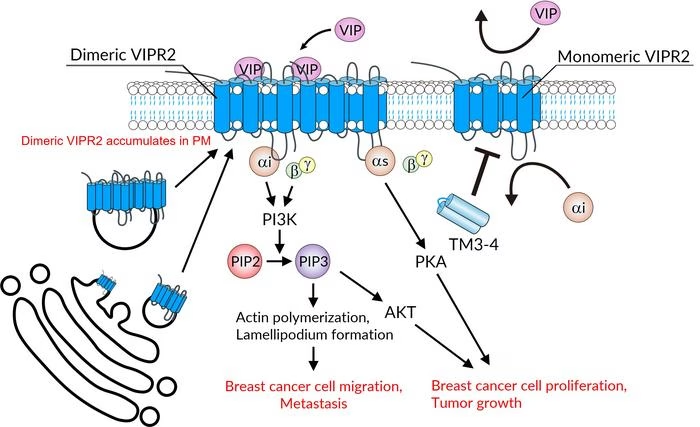
Hiroshima University researchers discover protein interactions that could lead to new treatments targeting aggressive breast cancer.
Study reveals why birds sing more at dawn in tropical forests
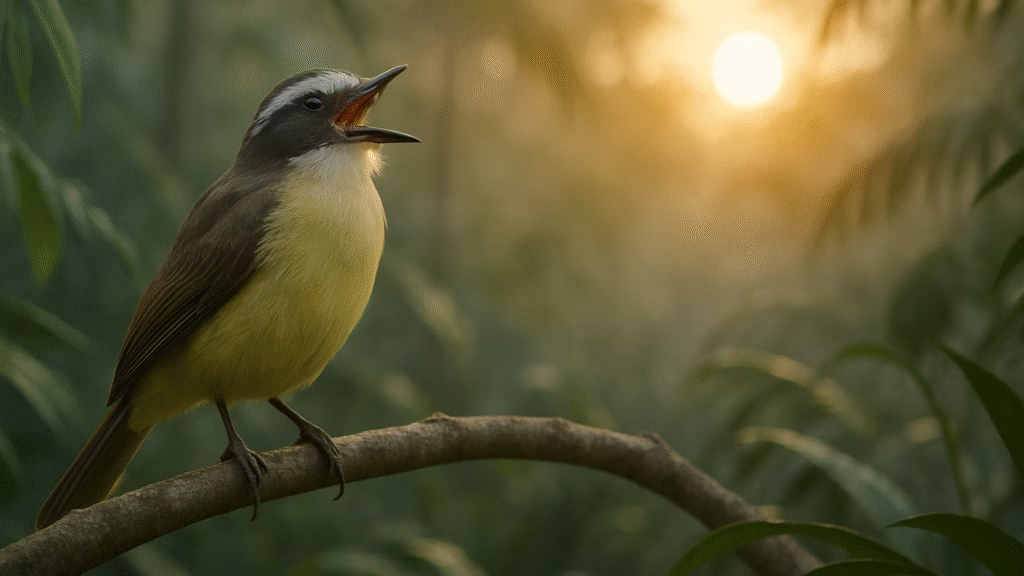
Cornell University researchers find territorial behaviour and omnivorous diets drive increased dawn singing among tropical birds.
Pasteurizing fruit smoothies could improve digestion of beneficial polyphenols
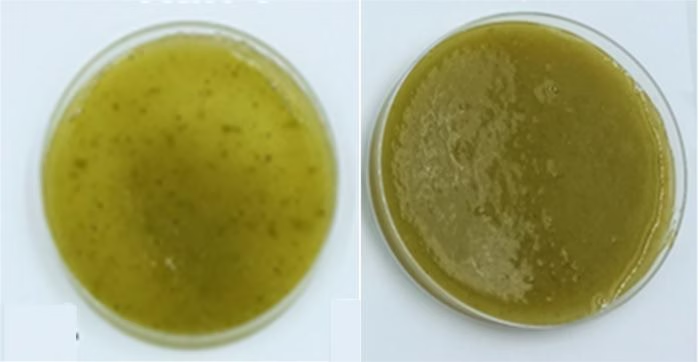
University of Navarre researchers find high-temperature pasteurisation increases polyphenol absorption by gut microbiome by 44%.
AI identifies key gene sets that cause complex diseases
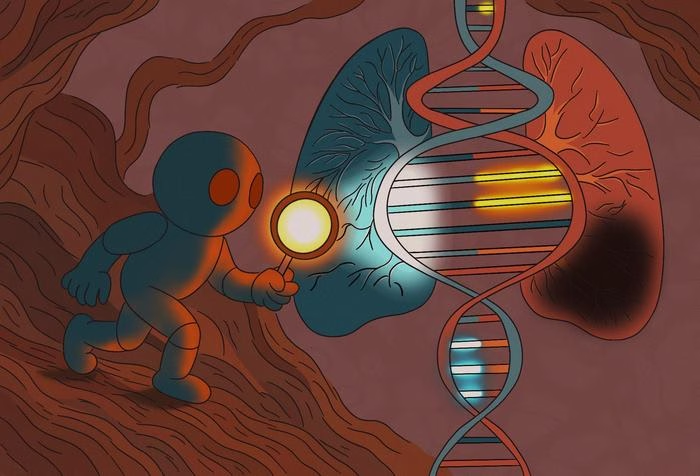
Northwestern University researchers develop AI tool to uncover gene networks, paving the way for personalised treatments.
Humans have unique breathing “fingerprints” that may signal health status

Weizmann Institute of Science discovers nasal breathing patterns can identify individuals and correlate with mental health.
Lymph node on a chip: New immune system model may enhance precision medicine research
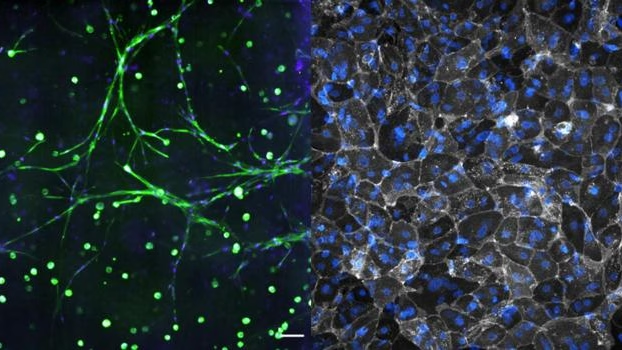
Virginia Tech and University of Virginia collaborate to develop bioengineered lymph node model, advancing cancer metastasis studies.
Creatine is safe, effective and important for everyone, longtime researcher says

Texas A&M University study reveals creatine’s role in improving cognitive function and muscle mass across all ages.
Window-sized device taps the air for safe drinking water

MIT researchers develop a hydrogel-based water harvester, capturing clean water even in arid desert conditions.