
Earthworms reveal an evolutionary mechanism which could defy Darwin

Researchers at Pompeu Fabra University discover rapid genome reorganisation in worms, challenging gradual evolutionary theories.
Gut microbiome composition and food insecurity linked to risk of cognitive impairment in adults
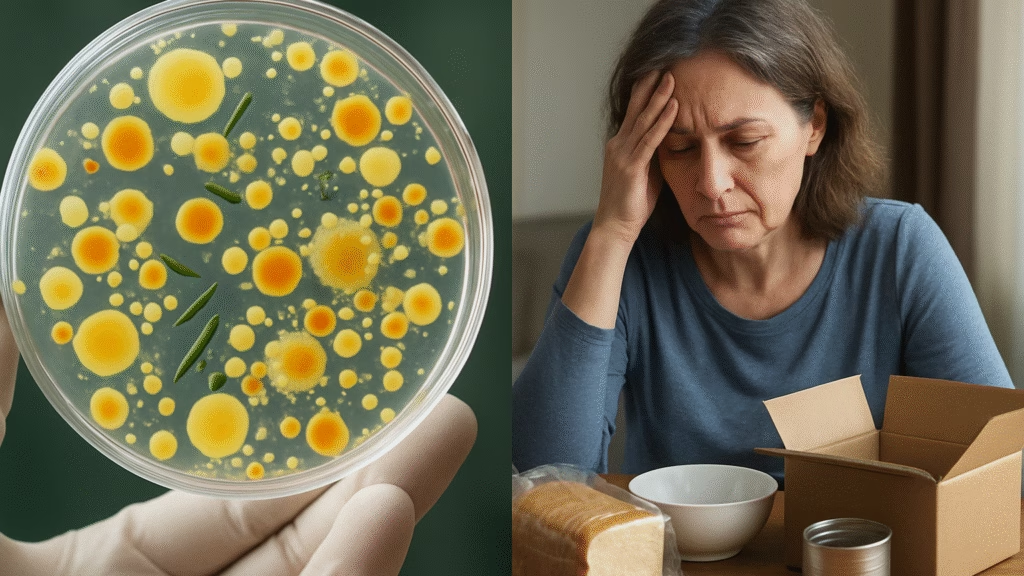
Mount Sinai University researchers find microbial diversity and food access significantly influence cognitive health in adults.
Hold the cream and sugar: black coffee linked to lower risk of death

Tufts University study finds 1-2 cups of black coffee daily reduces all-cause mortality risk by 14 percent.
AI perceived more negatively than climate science or science in general

University of Pennsylvania study reveals public concerns about AI’s unintended consequences, despite less political polarisation.
Mushrooms could be the key to developing better materials

Binghamton University researchers explore fungi’s microscopic filaments, aiming to revolutionise material strength with AI-driven models.
Living near harmful algal blooms reduces life expectancy with ALS

University of Michigan researchers find cyanobacteria toxins may accelerate ALS progression, impacting life expectancy by nearly a year.
Smart contact lens keeps an eye on your eyes—even when they’re closed
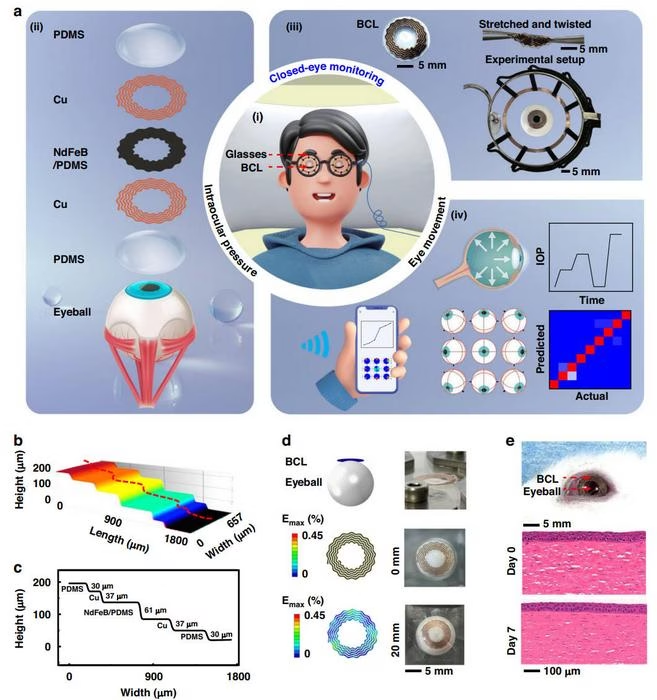
University of Electronic Science and Technology of China develops lens monitoring eye health with wireless, real-time data.
Could ‘pausing’ cell death be the final frontier in medicine on Earth and beyond?
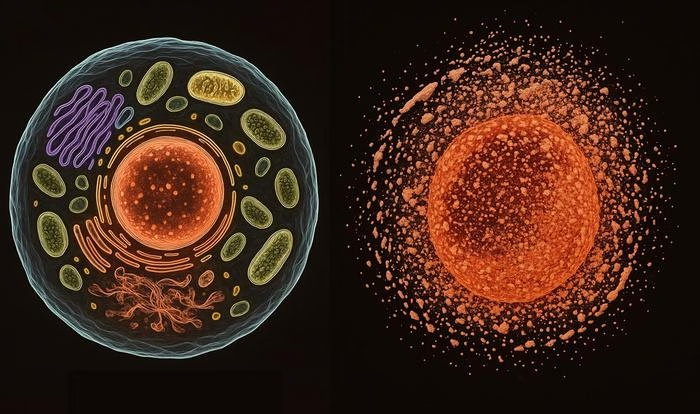
University College London explores necrosis intervention, potentially transforming age-related disease treatments and space health strategies.
Tens of millions of nanoneedles could replace painful cancer biopsies
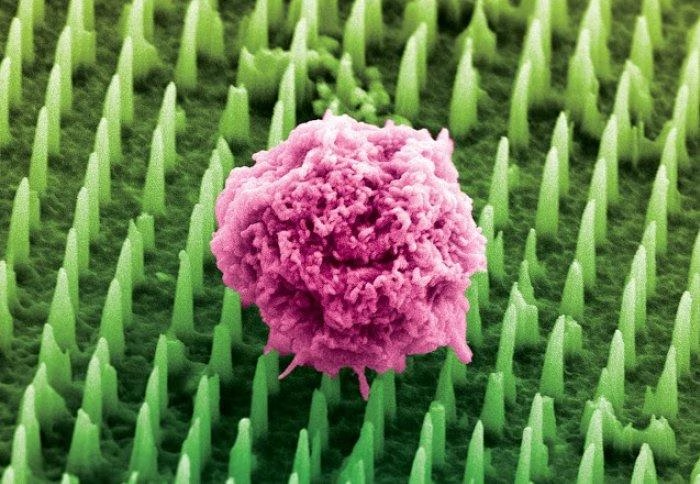
King’s College London develops painless nanoneedle patch, offering real-time molecular insights for disease monitoring.
Thinking in sync: How brain rhythms support intelligence
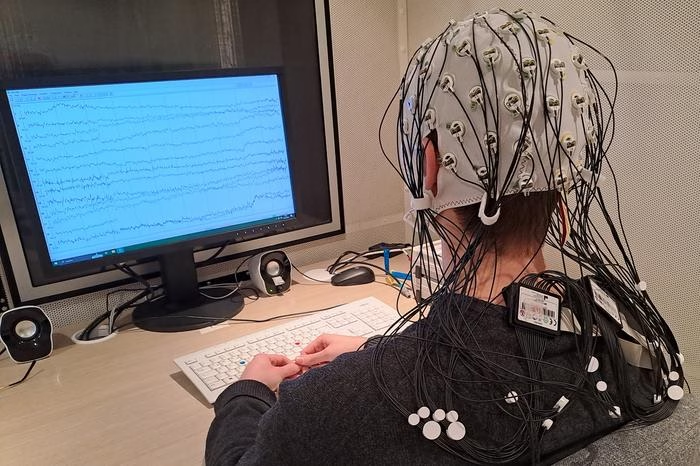
Researchers at Johannes Gutenberg University Mainz discover midfrontal theta wave synchronisation enhances cognitive flexibility and focus.