
Creatine is safe, effective and important for everyone, longtime researcher says

Texas A&M University study reveals creatine’s role in improving cognitive function and muscle mass across all ages.
Sniffing out hunger: a nose-to-brain connection linked to appetite

Researchers at the Max Planck Institute find specific nerve cells in mice that regulate appetite through smell.
Locations of treats are stored in specialized neural maps
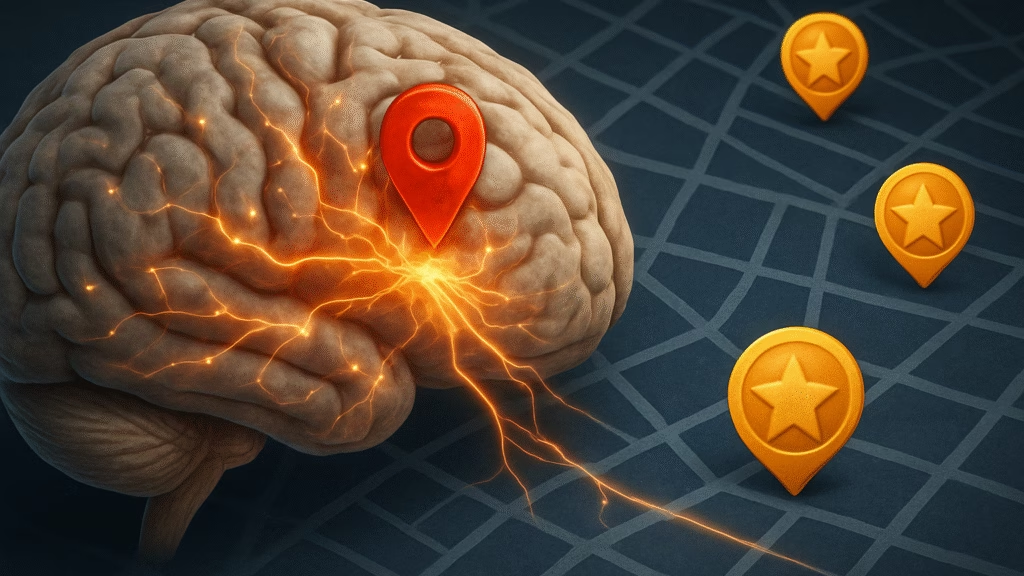
Stanford University researchers find adaptable neural maps in mice, revealing insights into dementia and addiction behaviours.
First-of-its-kind technology helps man with ALS ‘speak’ in real time
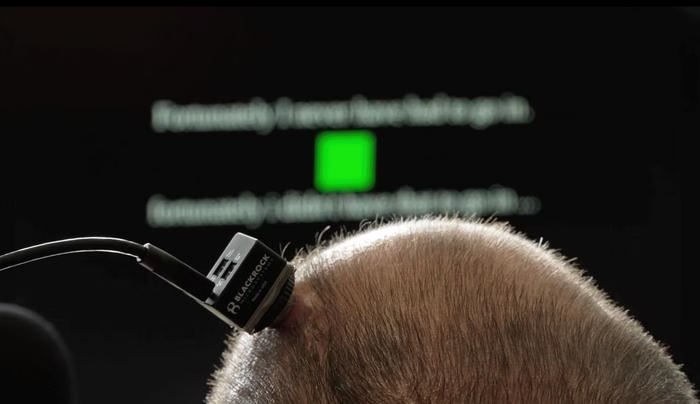
University of California, Davis researchers develop brain-computer interface allowing ALS patient to communicate with expressive intonation.
How the brain solves complicated problems
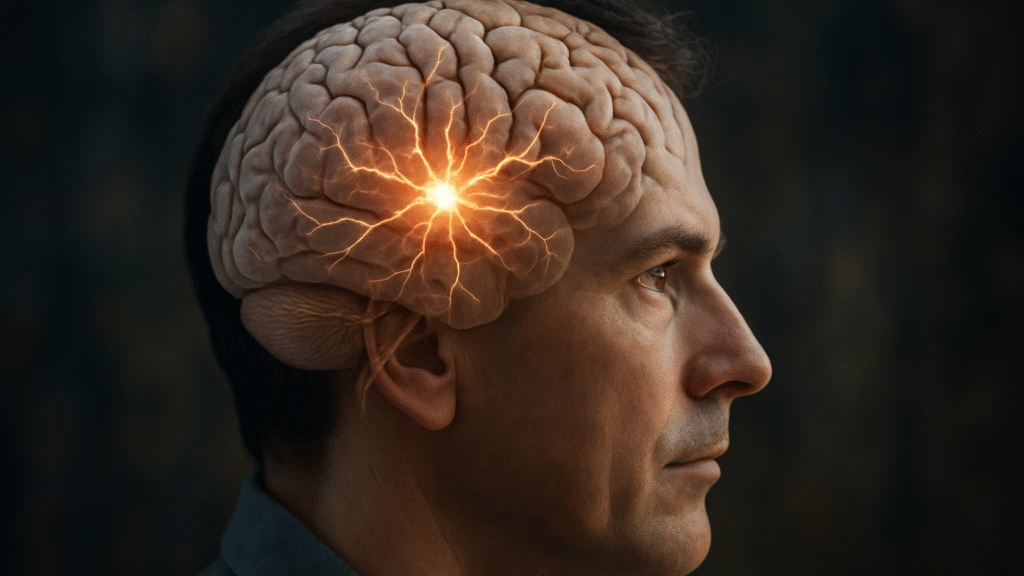
MIT researchers uncover how humans use hierarchical and counterfactual reasoning strategies to navigate complex mental tasks.
From puck drop to brain pop: Analysing hockey fan reactions
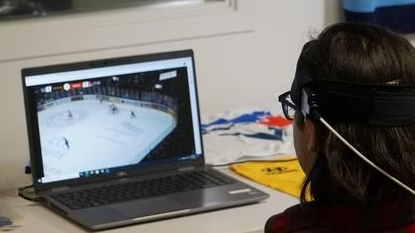
University of Waterloo researchers discover passionate hockey fans’ brains show heightened activity during offensive faceoff moments.
New brain-reading video game reduces chronic nerve pain

University of New South Wales researchers develop innovative EEG-based interactive game that trains people to alter their brain waves.
Electronic face tattoo gauges mental strain
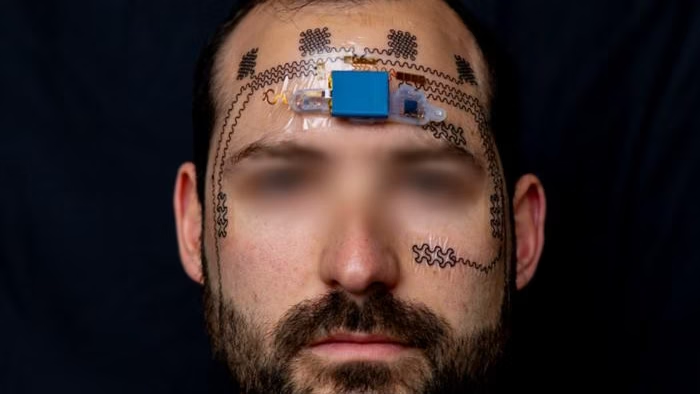
University of Texas researchers develop low-cost, wireless e-tattoo for personalised mental workload monitoring and prediction.
New ketamine study promises extended relief for depression

Vanderbilt University researchers prolong ketamine’s antidepressant effects, potentially benefiting 20% with Major Depressive Disorder (MDD).
Are groovy brains more efficient?

University of California, Berkeley researchers find deeper brain grooves enhance connectivity, improving reasoning and cognitive functions.