
Virtual reality could help stroke survivors regain movement

Flinders University researchers find VR therapy increases rehabilitation time, slightly improving arm function and balance for stroke survivors.
Positive life outlook may protect against middle-aged memory loss, 16-year study suggests

University of Liverpool research reveals higher wellbeing linked to better memory scores, independent of depressive symptoms.
Stargazing flight: How Bogong moths use the night sky to navigate hundreds of kilometers
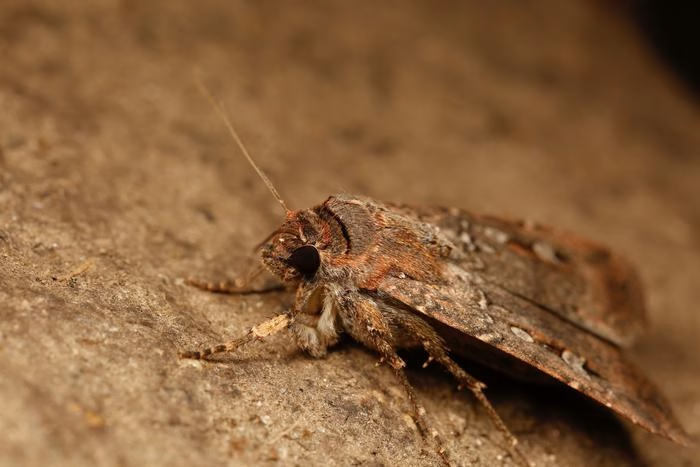
University of South Australia researchers discover Bogong moths’ dual compass system using stars and Earth’s magnetic field.
Ear wax could help screen for Parkinson’s disease

Researchers at Zhejiang University discover unique ear wax biomarkers, offering a cost-effective early Parkinson’s detection method.
Cyborg tadpoles with soft, flexible neural implants
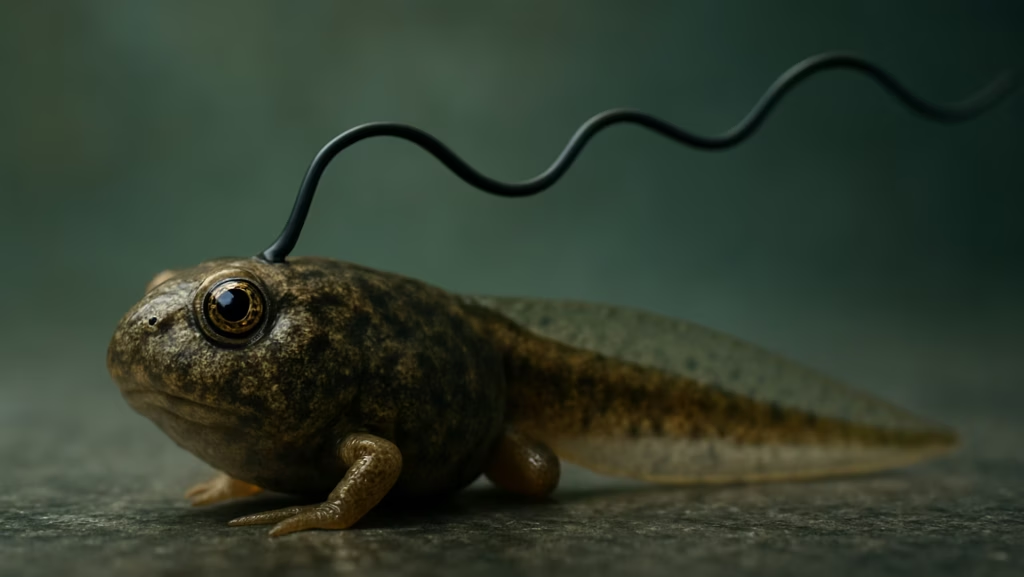
Harvard researchers develop stretchable bioelectronic devices for tadpole embryos, enabling non-invasive monitoring of neural activity.
Gut microbiome composition and food insecurity linked to risk of cognitive impairment in adults
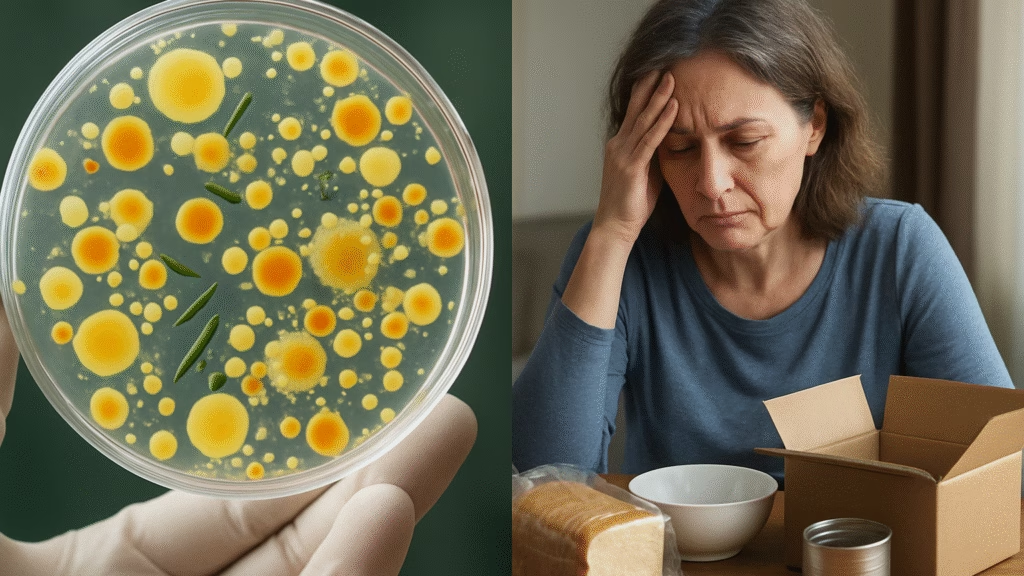
Mount Sinai University researchers find microbial diversity and food access significantly influence cognitive health in adults.
Living near harmful algal blooms reduces life expectancy with ALS

University of Michigan researchers find cyanobacteria toxins may accelerate ALS progression, impacting life expectancy by nearly a year.
Tens of millions of nanoneedles could replace painful cancer biopsies
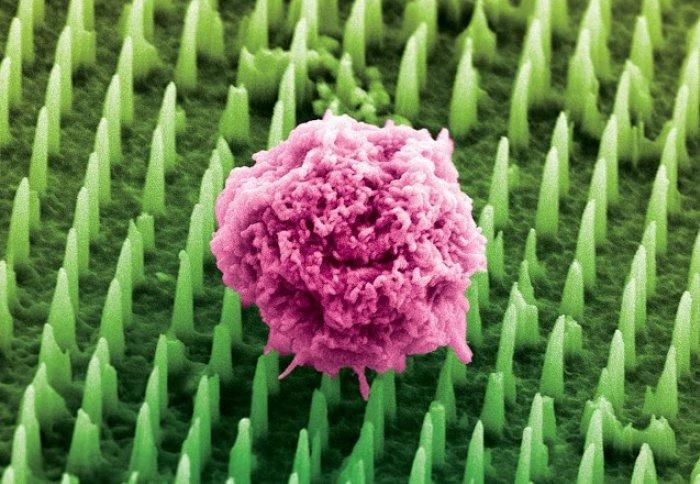
King’s College London develops painless nanoneedle patch, offering real-time molecular insights for disease monitoring.
Thinking in sync: How brain rhythms support intelligence
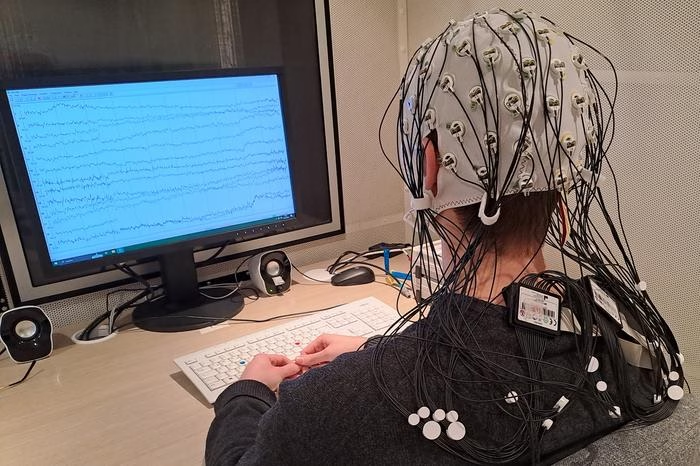
Researchers at Johannes Gutenberg University Mainz discover midfrontal theta wave synchronisation enhances cognitive flexibility and focus.
What the human brain can do that AI can’t
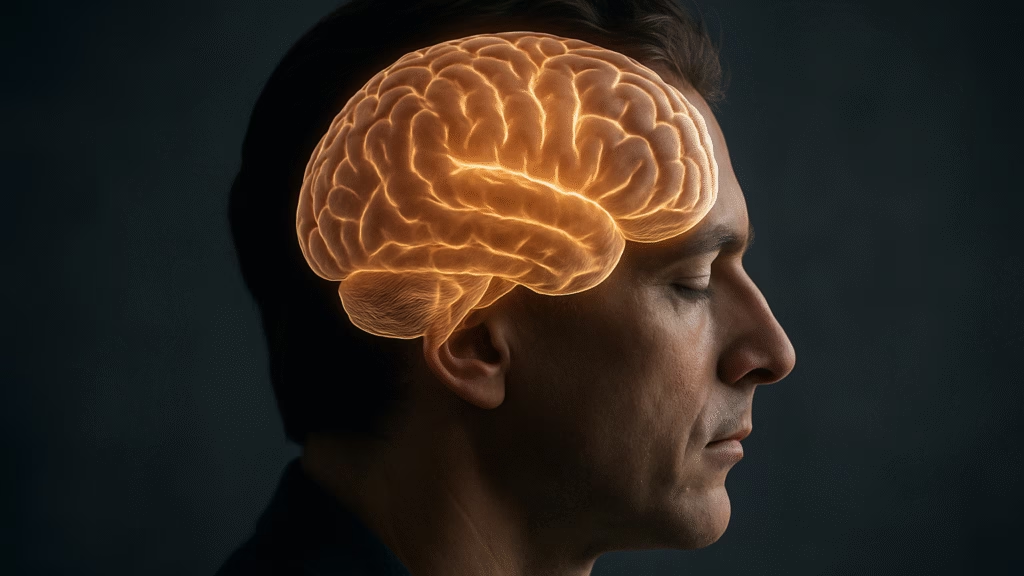
University of Amsterdam researchers reveal unique brain activations, showing AI’s limitations in understanding action opportunities.