
Rings of time: unearthing climate secrets from ancient trees
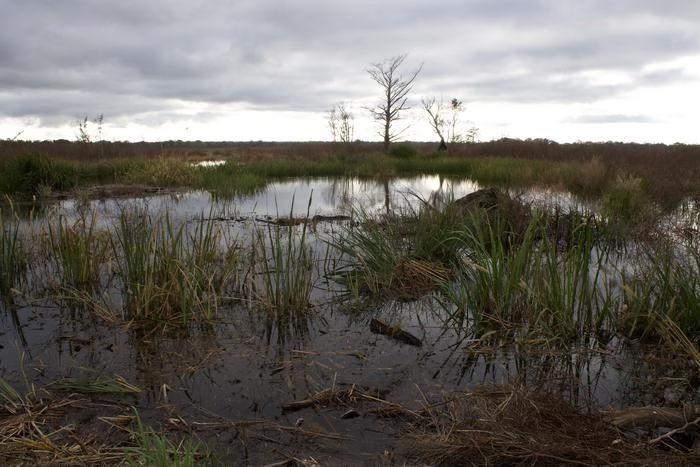
Florida Atlantic University reveals ancient bald cypress trees’ growth patterns, highlighting climate impacts over 1,500 years.
Tiny device spins blood clots away
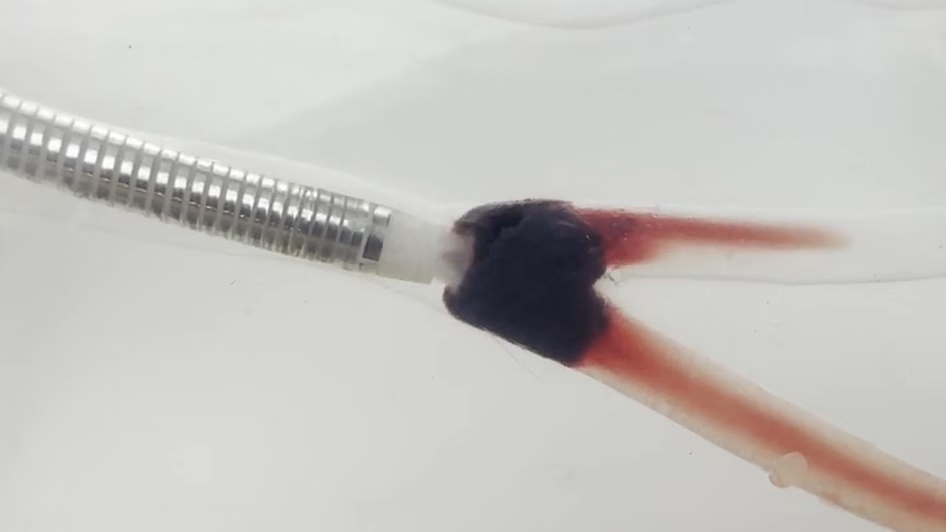
Stanford University develops milli-spinner thrombectomy, doubling clot removal efficacy and offering new hope for stroke patients.
Skin bacteria help protect us from sunlight

Researchers at the Medical University of Graz find skin bacteria metabolise UV-induced molecules, enhancing sun protection.
Black tea and berries could contribute to healthier aging

Edith Cowan University researchers find flavonoid-rich foods like black tea reduce frailty and improve mental health.
Bed bugs are most likely the first human pest, 60,000 years and counting

Virginia Tech researchers reveal bed bugs’ evolutionary link to humans, tracing origins back to Neanderthal era.
What lurks beneath? Only 0.001 percent of the deep seafloor has been imaged

Researchers from Ocean Discovery League and the University of Rhode Island highlight the urgent need for expanded exploration efforts.
New larvae-attracting gel could boost coral reef restoration
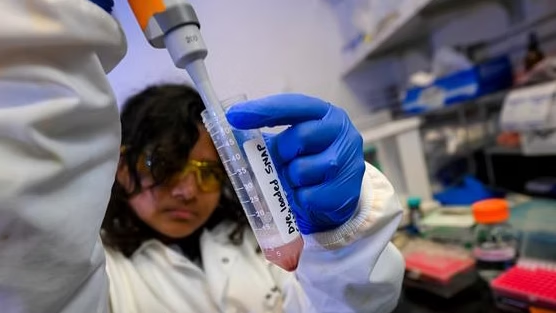
UC San Diego researchers develop nanoparticle gel that enhances coral larvae settlement, potentially reversing reef decline.
30 percent weight loss in mice by restricting one amino acid

NYU Grossman School of Medicine researchers discover cysteine depletion through diet and genetic engineering triggers rapid fat loss.
Kissing linked to depression transmission through oral microbiota exchange

Researchers at the University of Tehran discover oral bacteria changes align with cortisol fluctuations in newlyweds.
New find: Chimpanzees are capable of complex communication

Max Planck Institute researchers uncover chimpanzees combining different calls to create new meanings, similar to humans.