
New find: Chimpanzees are capable of complex communication

Max Planck Institute researchers uncover chimpanzees combining different calls to create new meanings, similar to humans.
Living tattoos for buildings
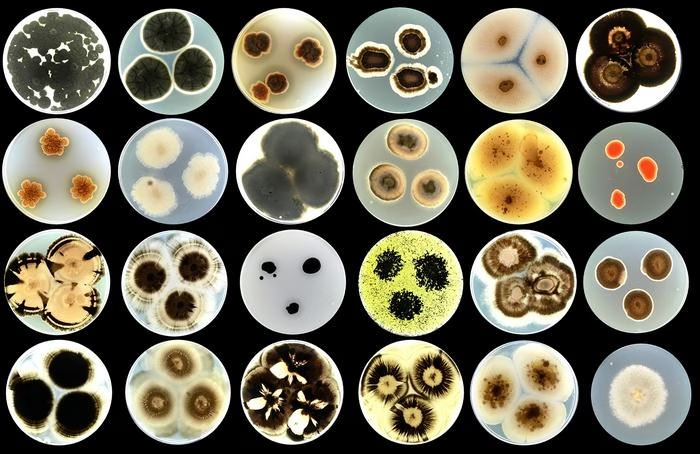
Graz University of Technology researchers develop microbial façades that protect, repair surfaces, and filter air pollutants.
Street smarts: how a hawk learned to use traffic signals to hunt more successfully

Researchers at the University of Tennessee discover a young hawk using vehicle queues on particular signal phases to surprise prey.
Cockroach cyborgs navigate with light-driven helmets

University of Osaka researchers use UV light helmets to steer cockroaches, achieving 94% maze escape success rate.
New ketamine study promises extended relief for depression

Vanderbilt University researchers prolong ketamine’s antidepressant effects, potentially benefiting 20% with Major Depressive Disorder (MDD).
Unravelling the origin of mysterious ultra-high-energy radiation

Researchers at the Norwegian University of Science and Technology explore black holes as potential sources of cosmic rays.
Vitamin D slows ageing by nearly 75 percent in first large-scale trial

Researchers at Mass General Brigham find vitamin D3 supplements prevented almost 3 years of telomere shortening (ageing factor) over 4 year trial period, slowing biological aging.
Passive infrared contact lenses allow people to see in the dark, even with their eyes closed

University of Science and Technology of China develops non-invasive lenses using nanoparticles for enhanced infrared vision.
Improving cataract surgery in Global South with AI video analysis
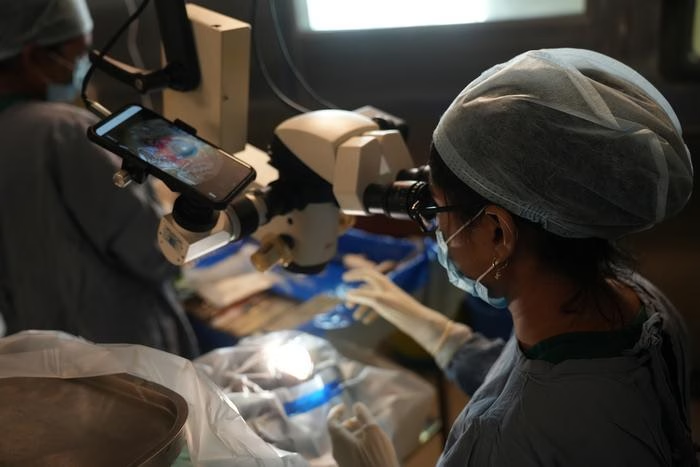
University of Bonn leads research to improve cataract surgery training, using AI to analyse surgical video phases.
Your chemical aura is suppressed by perfume and body lotion
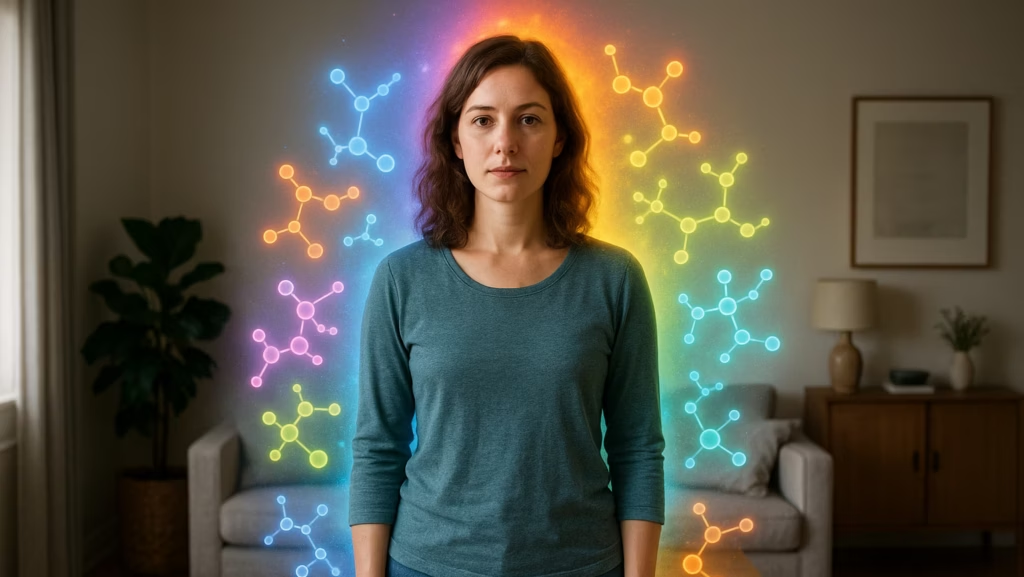
Researchers at Max Planck Institute find personal care products significantly alter indoor air chemistry and human exposure.