
Magnetically guided nanobots for tooth sensitivity relief

Researchers at Indian Institute of Science develop biocompatible CalBots, offering long-lasting relief by sealing dentinal tubules.
Designing drones that can fly in air ducts

Université de Lorraine researchers develop drones using AI and lasers for safer navigation in challenging air duct environments.
Animal-inspired AI robot learns to navigate unfamiliar terrain

Researchers at University of Leeds and UCL created a four‑legged robot, “Clarence,” trained via deep reinforcement learning to adapt gait transitions like animals—trotting, bounding, running—instantly across unfamiliar terrain.
Scientists develop method to build tiny custom microrobots

Researchers at the University of Colorado Boulder have created a new way to build and control tiny particles that can move and work like microscopic robots
Stargazing flight: How Bogong moths use the night sky to navigate hundreds of kilometers
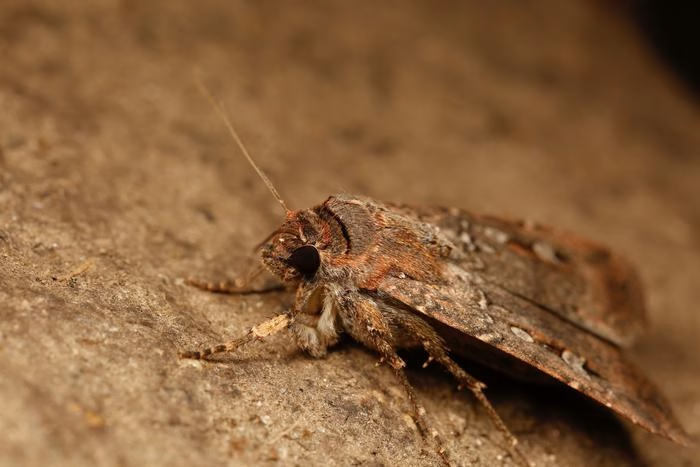
University of South Australia researchers discover Bogong moths’ dual compass system using stars and Earth’s magnetic field.
Ultrasound scanning robotic arm with adjustable constant contact force
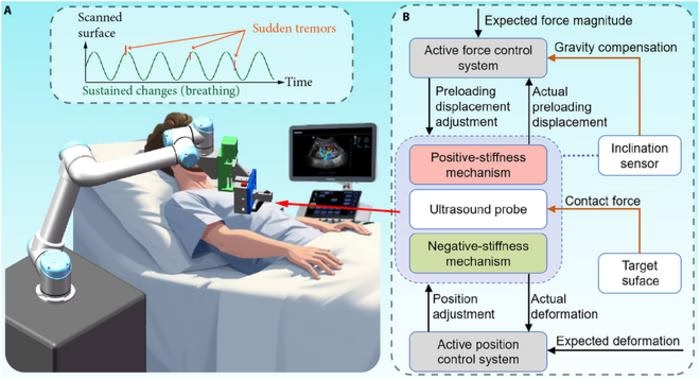
University of Macau’s innovative system enhances diagnostic imaging by stabilising contact force amidst physiological fluctuations.
The rotors are also the wheels on this morphobot
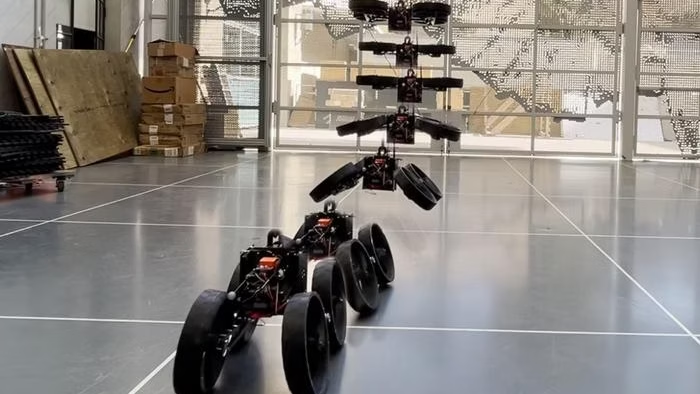
Caltech researchers develop ATMO, a drone capable of mid-air morphing, enhancing agility and operational versatility.
Cockroach cyborgs navigate with light-driven helmets

University of Osaka researchers use UV light helmets to steer cockroaches, achieving 94% maze escape success rate.
Tiny light-powered evaporator bot purifies water
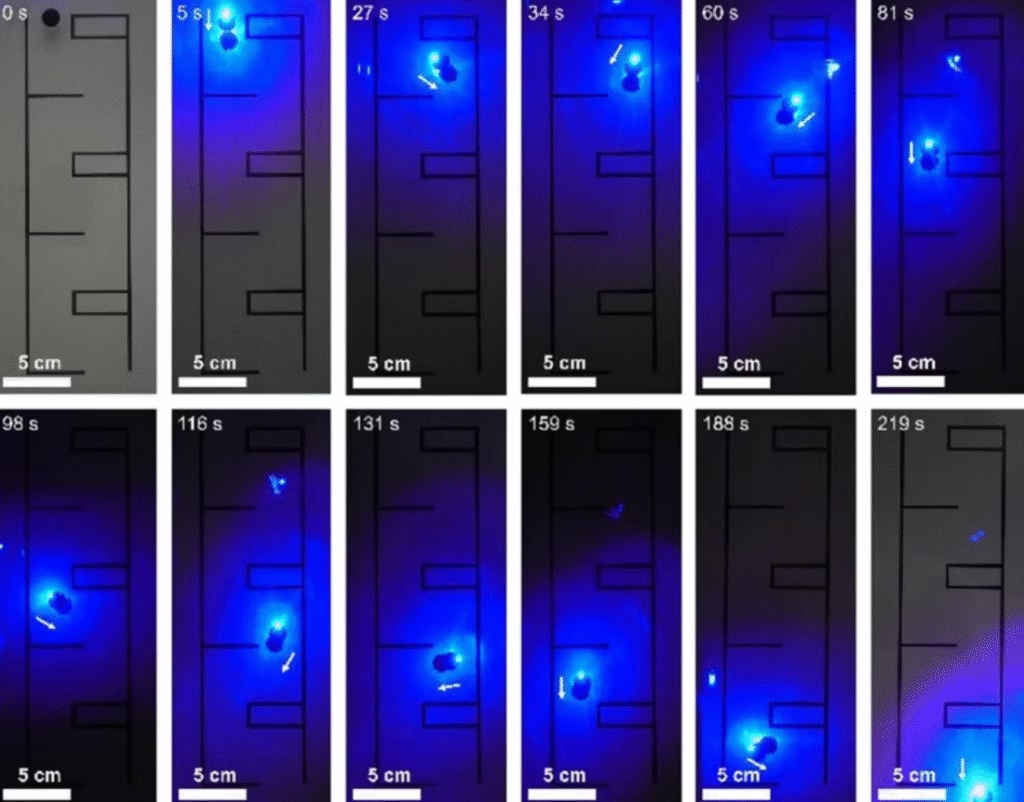
Jilin University develops solar-powered robot, autonomously navigating water surfaces, utilising hybrid materials for enhanced purification.
Neuromorphic chip sees, thinks and remembers, without external computer
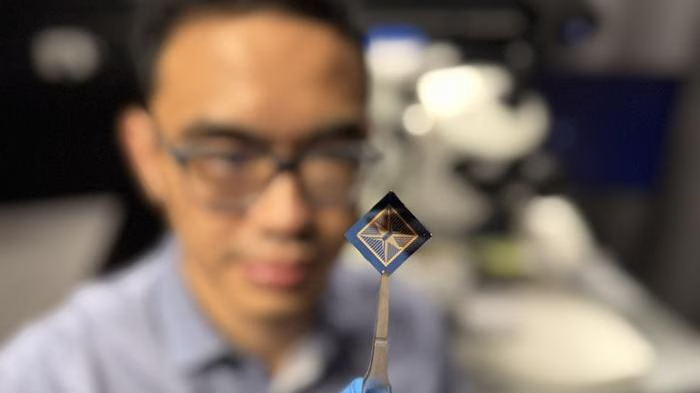
RMIT University engineers mimic human brain functions in next-gen vision chip for advanced robotics applications.