
Jilin University develops solar-powered robot, autonomously navigating water surfaces, utilising hybrid materials for enhanced purification.
From Chinese Society for Optical Engineering 21/05/25 (first released 19/05/25)
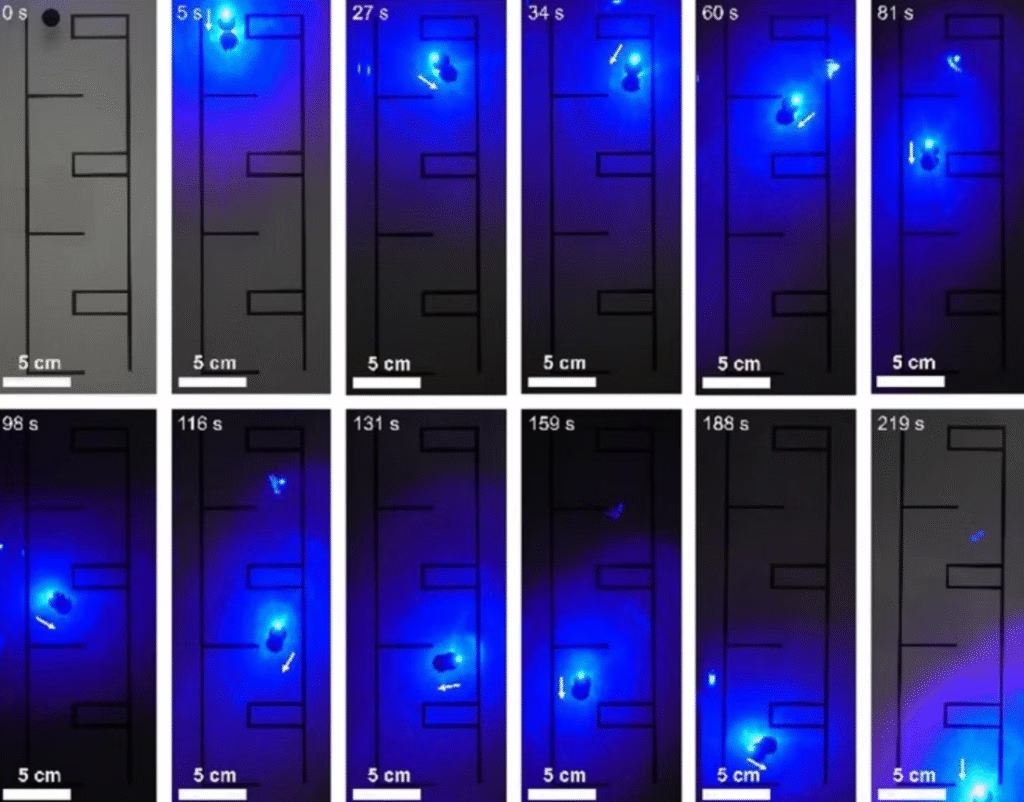
A research team from Jilin University has developed a solar-powered floating robot that purifies water and autonomously navigates on its surface, offering a new strategy for smart, energy-free water treatment in complex environments.
Their findings, published in PhotoniX, are reported in a study titled “Light-propelled photocatalytic evaporator for robotic solar-driven water purification.”
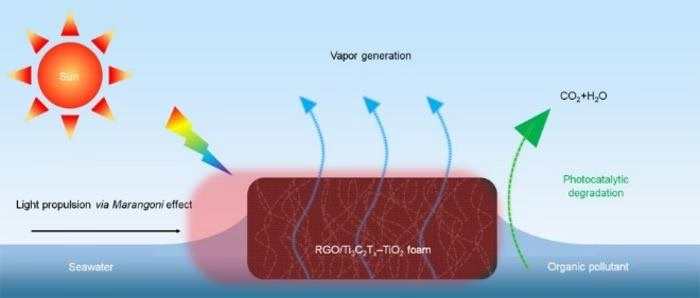
The system—designed as a lightweight, porous foam structure—integrates three critical functions: photocatalytic degradation, solar steam generation, and self-propulsion under light.
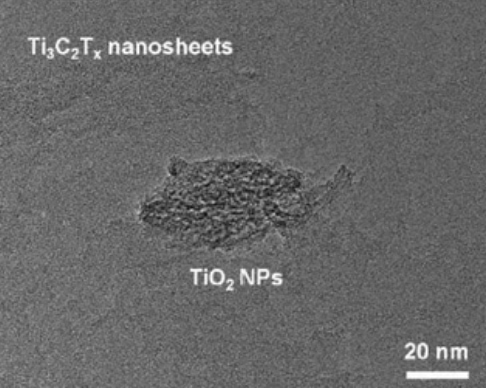
It is composed of a hybrid material that combines reduced graphene oxide, Ti₃C₂Tₓ, and in situ grown TiO₂ nanoparticles, enabling the structure to respond efficiently to sunlight across a broad spectrum.
Unlike conventional solar-driven water purification devices, which are typically static and location-bound, this light-powered robot can move across the water surface by harnessing the Marangoni effect.
When light is unevenly applied to one side of the device, it creates a surface tension gradient that propels the robot forward.
This motion is entirely light-controlled—no batteries, wires, or motors are needed.
By steering the light, researchers can direct the robot along programmable paths, enabling it to navigate obstacles or locate specific contaminated regions.
Simultaneously, the device purifies water through two mechanisms.
The TiO₂ nanoparticles catalyze the breakdown of organic pollutants, while the foam structure efficiently converts sunlight into heat to drive evaporation.
The dual-action approach enhances water purification capacity and energy utilization, all within a single, self-contained platform.
This study demonstrates the potential of integrating photonic materials, solar energy harvesting, and intelligent motion control into a compact, autonomous system.
According to the authors, this work represents a breakthrough in combining light-driven propulsion and multifunctional purification, especially in remote or resource-limited areas where access to clean water and external power is restricted.
As water scarcity becomes an urgent global issue, the development of intelligent, self-powered systems like this robotic evaporator provides an innovative direction toward sustainable water treatment solutions.
More info
You may also be curious about:
-

‘Space archaeology’ reveals first dynamic history of a giant spiral galaxy
-
Thousands of pico-satellites may transform how phones connect to space
-

Barcelona’s Low Emission Zone reduces NO₂ levels
-

Neuroadaptive VR treatment for arachnophobia
-
The freshwater hidden beneath the Great Salt Lake
-

Moby Dick ‘ship sinking’ sperm whales caught headbutting on camera
-

Changing shower and toilet habits could help close England’s 5 billion litre water gap, Surrey-led research finds
-

Is your brain aging faster than you are? Sleep may hold the key
-
Initial tests find lead in children’s fast-fashion clothing
-

Aquatic plant reduces antibiotics in water and genetic damage in fish
-

When the Earth moved
-

Turning sawdust into fire-resistant, eco-friendly materials using watermelon seeds