
Barcelona’s Low Emission Zone reduces NO₂ levels

Research by Barcelona Institute for Global Health shows 15.8% NO₂ reduction, limited effect on particulate matter.
The freshwater hidden beneath the Great Salt Lake
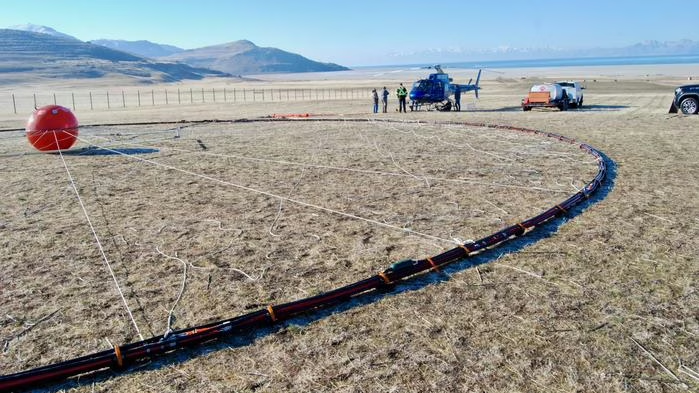
University of Utah researchers discover a vast underground freshwater reservoir, potentially mitigating dust pollution issues.
Initial tests find lead in children’s fast-fashion clothing
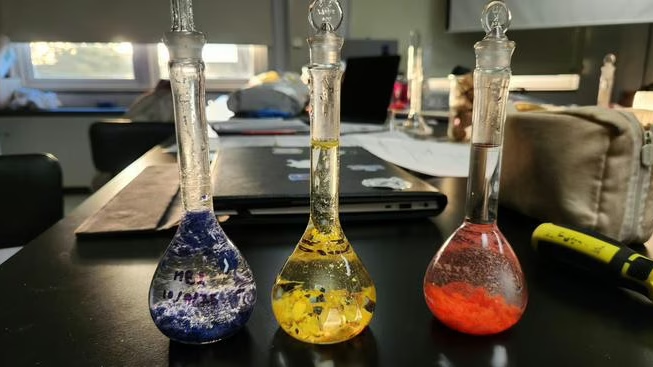
Marian University researchers discover over 100 ppm lead levels in vibrant children’s clothing, raising health concerns.
Aquatic plant reduces antibiotics in water and genetic damage in fish
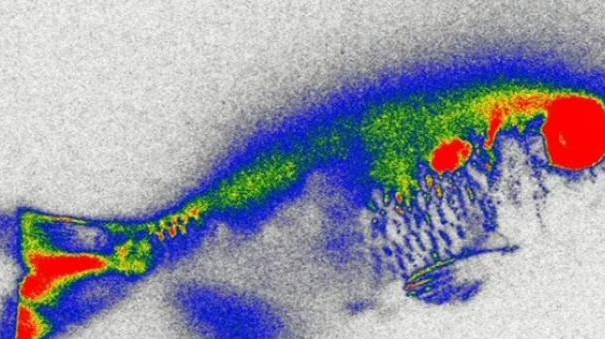
Researchers at the University of São Paulo find Salvinia auriculata mitigates antibiotic bioaccumulation and seasonal contamination effects.
Scientists turn old rubber gloves into new materials that capture CO2
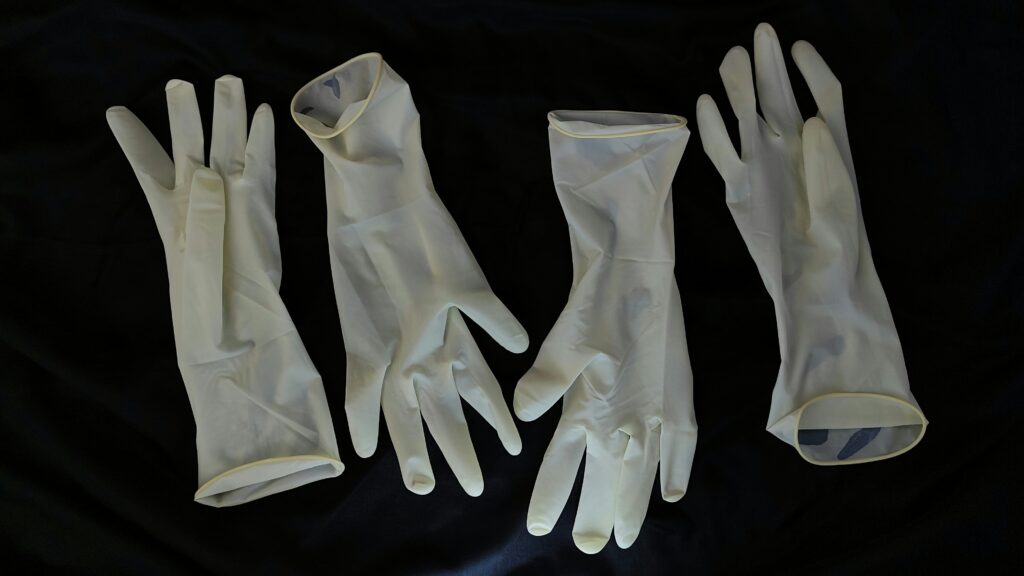
University of St Andrews researchers transform nitrile-rubber waste into CO2-capturing materials using innovative recycling techniques.
‘Sea creature’ minibot hoovers up oil spills

RMIT University engineers develop eco-friendly, remote-controlled minibot inspired by sea urchins, efficiently tackling hazardous oil spills.
Okra, fenugreek extracts remove up to 90% of microplastics from water

Tarleton State University researchers discover plant extracts as biodegradable alternatives, achieving up to 90% microplastic removal.
Big and small dogs both impact indoor air quality, just differently

Researchers at the Swiss Federal Technology Institute find large dogs release more microbes, small dogs more particles.
New AI algorithm enables scientific monitoring of “blue tears”

Researchers at Shenzhen Institute of Advanced Technology develop BT-YOLO for precise algal bloom analysis and forecasting.
Proximity to nuclear power plants associated with increased cancer mortality

Harvard T.H. Chan School of Public Health finds older adults most affected, with 115,000 U.S. deaths linked.