
Locations of treats are stored in specialized neural maps
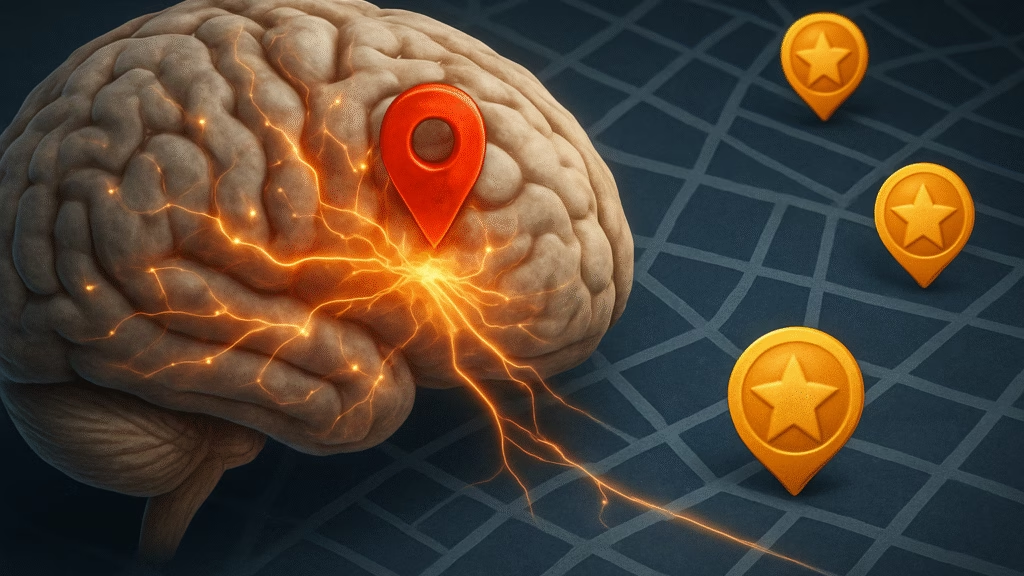
Stanford University researchers find adaptable neural maps in mice, revealing insights into dementia and addiction behaviours.
First-of-its-kind technology helps man with ALS ‘speak’ in real time
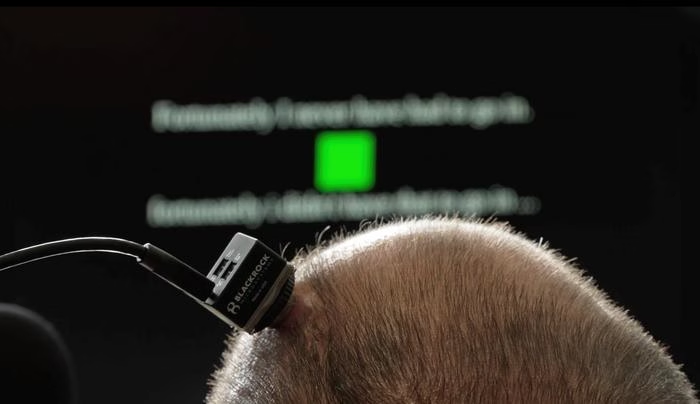
University of California, Davis researchers develop brain-computer interface allowing ALS patient to communicate with expressive intonation.
Ultrasound scanning robotic arm with adjustable constant contact force
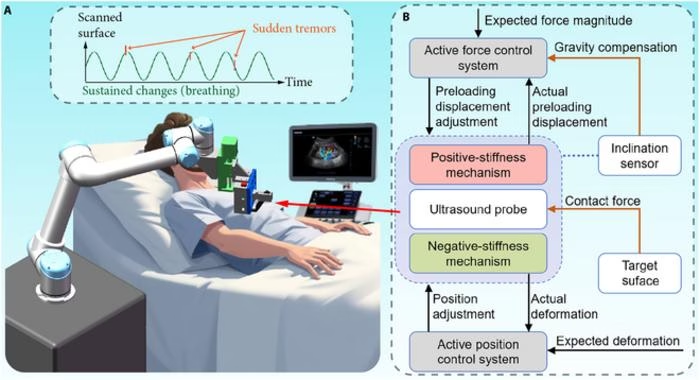
University of Macau’s innovative system enhances diagnostic imaging by stabilising contact force amidst physiological fluctuations.
Tiny device spins blood clots away
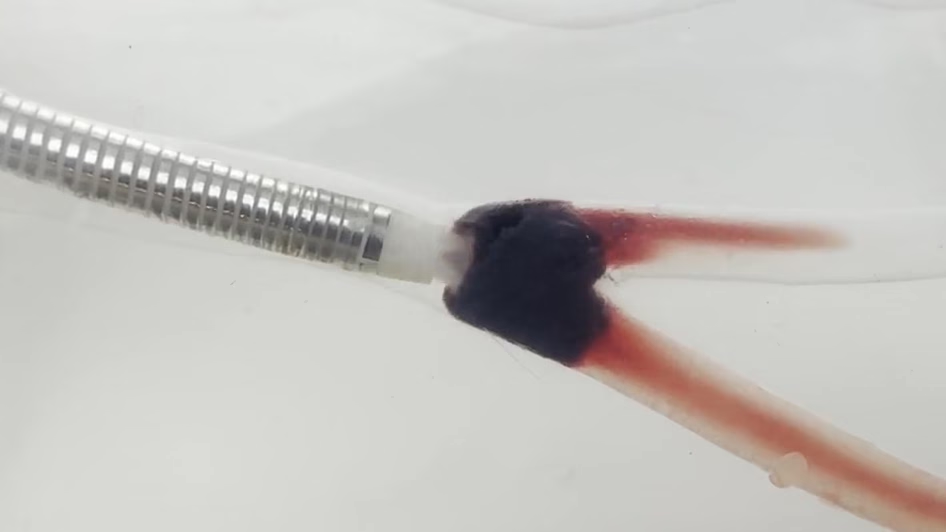
Stanford University develops milli-spinner thrombectomy, doubling clot removal efficacy and offering new hope for stroke patients.
Skin bacteria help protect us from sunlight

Researchers at the Medical University of Graz find skin bacteria metabolise UV-induced molecules, enhancing sun protection.
New brain-reading video game reduces chronic nerve pain

University of New South Wales researchers develop innovative EEG-based interactive game that trains people to alter their brain waves.
Black tea and berries could contribute to healthier aging

Edith Cowan University researchers find flavonoid-rich foods like black tea reduce frailty and improve mental health.
Viral mouth-taping trend ‘sus’ says Canadian sleep expert

Western University researchers warn mouth-taping during sleep poses suffocation risk, worsening sleep apnea symptoms significantly.
Electronic face tattoo gauges mental strain
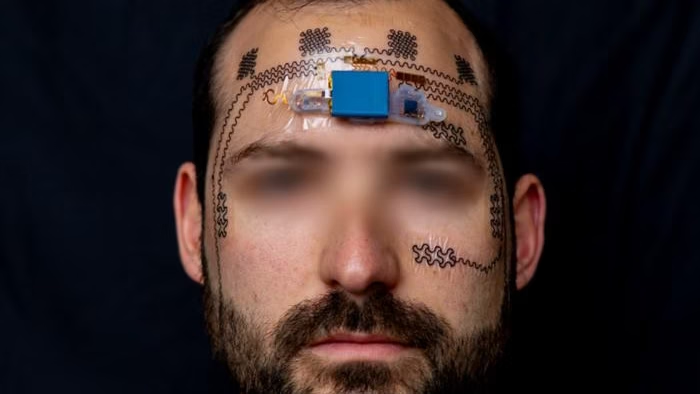
University of Texas researchers develop low-cost, wireless e-tattoo for personalised mental workload monitoring and prediction.
Ultrasonic wireless charging for implanted medical devices
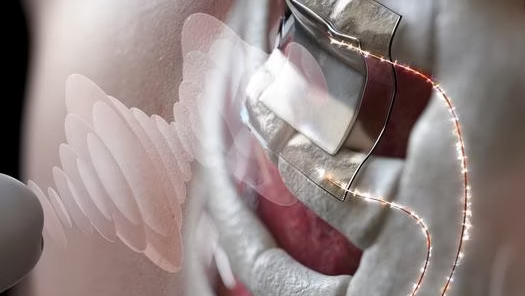
Korea University collaborates with KIST to enhance biocompatible ultrasonic receivers, enabling efficient power transfer for medical devices.