
Python blood could hold the secret to healthier weight loss
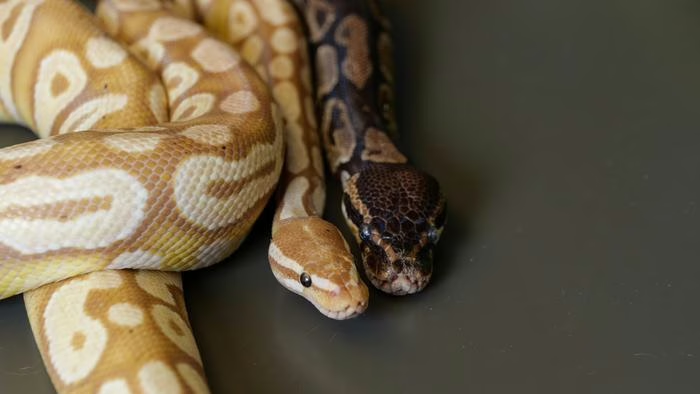
University of Colorado Boulder finds python blood metabolite suppresses appetite, aiding weight loss without adverse side effects.
EyeDAR: Roadside radar sensors could reduce blind spots for self-driving cars
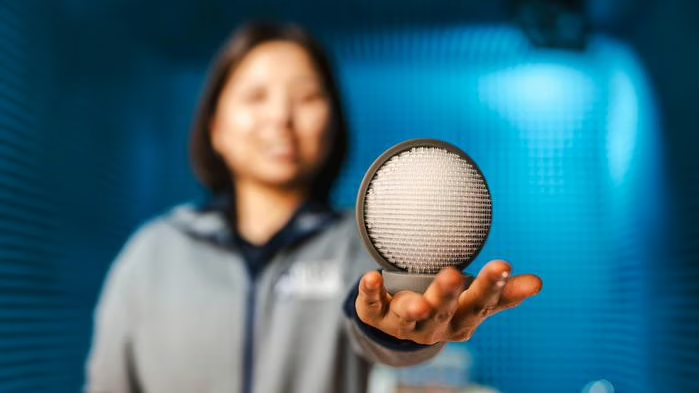
Rice University develops EyeDAR, a compact, low-power radar sensor enhancing AVs’ perception in challenging visibility conditions.
Lamprey-inspired amphibious suction cup lifts 850 times its own weight
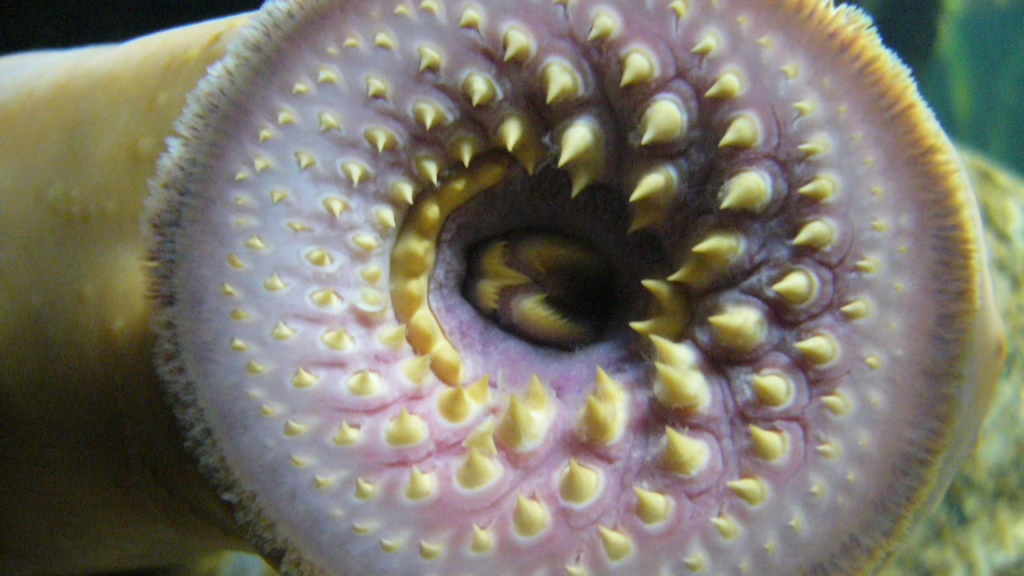
Peking University develops versatile suction disc, maintaining grip underwater and in air, inspired by lamprey anatomy.
‘Sea creature’ minibot hoovers up oil spills

RMIT University engineers develop eco-friendly, remote-controlled minibot inspired by sea urchins, efficiently tackling hazardous oil spills.
This odd little plant could help turbocharge crop yields

Researchers at Cornell University discover hornworts’ unique protein component could revolutionise photosynthesis efficiency in staple crops.
Is the bone implant of the future a hydrogel?

ETH Zurich researchers develop a biocompatible hydrogel implant that mimics natural bone healing with unprecedented precision.
Multimodal limbless crawling soft robot with a kirigami skin

University of Southern Denmark researchers develop innovative robot achieving agile movement with pneumatic muscles and kirigami technology.
A biological material that becomes stronger when wet could replace plastics

Researchers at the Institute for Bioengineering of Catalonia develop nickel-infused chitosan from shrimp shells for sustainability.
Elephant trunk whiskers exhibit material intelligence

Researchers at the Max Planck Institute discover elephants’ whiskers have unique stiffness gradients aiding precise touch.
Reversible, detachable robotic hand redefines dexterity

EPFL researchers develop dual-thumbed robotic hand capable of autonomous mobility, inspired by octopus and praying mantis.