
Team develops smart synthetic material inspired by octopus skin

Penn State researchers create multifunctional smart skin that adapts to stimuli, enabling camouflage and information encryption.
Scientists engineer unsinkable metal tubes

University of Rochester researchers develop superhydrophobic metal tubes, remaining buoyant despite damage, promising renewable energy applications.
Ultrasonic pest control to protect beehives

University of Strathclyde researchers use ultrasonic signals that mimic bat calls to deter wax moths from beehives.
Bio-hybrid robots turn food waste into functional machines

EPFL University researchers repurpose crustacean shells, integrating them with synthetic components for sustainable robotic applications.
Powered by mushrooms, living computers are on the rise

Researchers at The Ohio State University explore mushroom-based computing, offering eco-friendly alternatives to traditional semiconductors.
Scientists find curvy answer to harnessing “swarm intelligence”

Radboud University researchers develop geometric rules to control robotic swarms, inspired by natural flocking behaviours.
Toothpaste made from hair provides natural root to repair teeth

King’s College London researchers use keratin from hair to create eco-friendly toothpaste that mimics enamel structure.
Reusable ‘jelly ice’ keeps things cold — without meltwater

University of California, Davis researchers develop compostable gelatin-based cooling material, reducing contamination risks in food supply.
Researchers convert urine into bone implant material

University of California, Irvine scientists develop eco-friendly process transforming urine into valuable dental and bone implants.
Stargazing flight: How Bogong moths use the night sky to navigate hundreds of kilometers
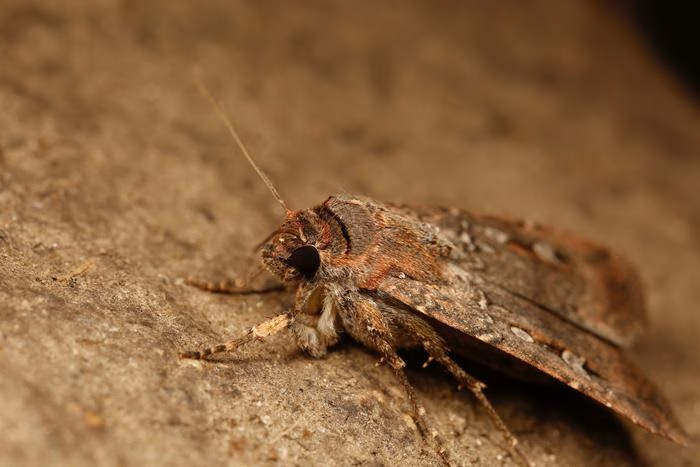
University of South Australia researchers discover Bogong moths’ dual compass system using stars and Earth’s magnetic field.