
Researchers at Osaka Metropolitan University explore Lawsone’s potential to reverse liver fibrosis, impacting millions worldwide.
From Osaka Metropolitan University 06/11/25 (first released 27/10/25)

Lawsonia inermis is best known for making henna, a versatile dye that is used to change the color of skin and clothes.
Now, researchers from Osaka Metropolitan University have found another use for the pigments extracted from the dye: treating liver disease.
Specifically, they could treat liver fibrosis, a disease that causes excess fibrous scar tissue to build up in the liver as a result of chronic liver injury caused by lifestyle choices such as excessive drinking.
Patients with liver fibrosis have increased risks of cirrhosis, liver failure, and cancer.
Despite 3–4% of the population having the advanced form of the disease, treatment options remain limited.
One potential treatment for the disease involves hepatic stellate cells (HSCs).
Usually, these cells maintain balance in the liver; however, when too many are activated, such as during liver injury, they produce excessive fibrous tissue and collagen, disrupting normal liver function.
A research group led by Associate Professor Tsutomu Matsubara and Dr. Atsuko Daikoku at the Graduate School of Medicine, Osaka Metropolitan University, developed a chemical screening system that identifies substances that directly act on activated HSCs.
Using the system, they identified Lawsone, a chemical component from Lawsonia inermis—also known as the henna tree—as a potential inhibitor of HSC activation.
When the researchers administered Lawsone, the mice that received the treatment showed reductions in markers of liver fibrosis, such as YAP, αSMA, and COL1A.
They also found upregulated cytoglobin, a marker associated with antioxidant functions in HSCs, suggesting that the HSCs were reverting back toward the non-fibrotic, quiescent type.
The professors believe that by making drugs based on Lawsone, they could create the first treatment that controls and even improves fibrosis.
“We are currently developing a drug delivery system capable of transporting drugs to activated HSCs and ultimately hope to make it available for patients with liver fibrosis,” Matsubara said.
“By controlling fibroblast activity, including HSCs, we could potentially limit or even reverse the effects of fibrosis.”
The study was published in Biomedicine & Pharmacotherapy.

More info
You may also be curious about:
-

‘Space archaeology’ reveals first dynamic history of a giant spiral galaxy
-
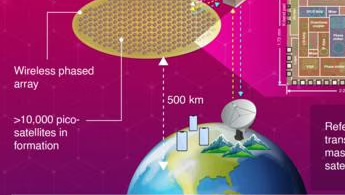
Thousands of pico-satellites may transform how phones connect to space
-

Barcelona’s Low Emission Zone reduces NO₂ levels
-
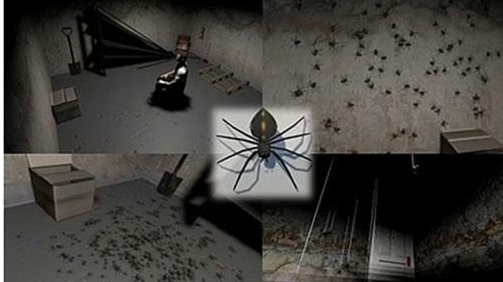
Neuroadaptive VR treatment for arachnophobia
-
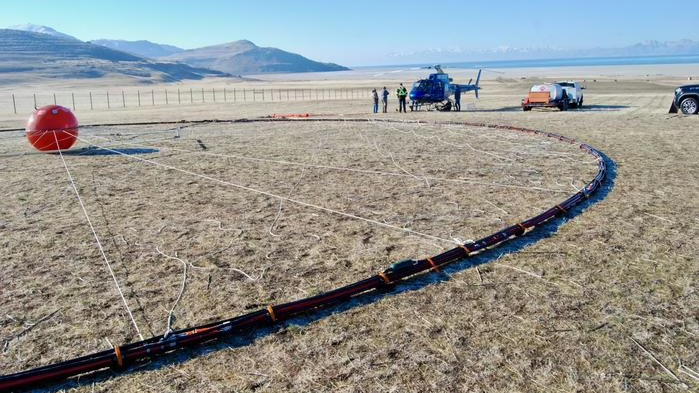
The freshwater hidden beneath the Great Salt Lake
-
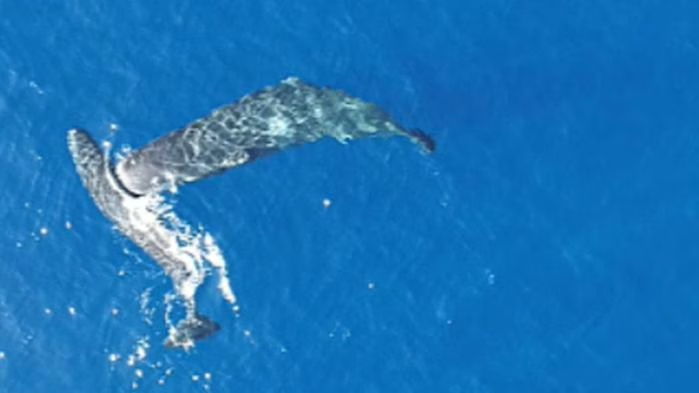
Moby Dick ‘ship sinking’ sperm whales caught headbutting on camera
-

Changing shower and toilet habits could help close England’s 5 billion litre water gap, Surrey-led research finds
-

Is your brain aging faster than you are? Sleep may hold the key
-
Initial tests find lead in children’s fast-fashion clothing
-
Aquatic plant reduces antibiotics in water and genetic damage in fish
-

When the Earth moved
-
Turning sawdust into fire-resistant, eco-friendly materials using watermelon seeds