
Researchers at Queen Mary University of London, UK, have discovered that chicks learn faster with specific colours, offering insights into intelligence and potential advancements in AI.
From Queen Mary University of London 13/07/24
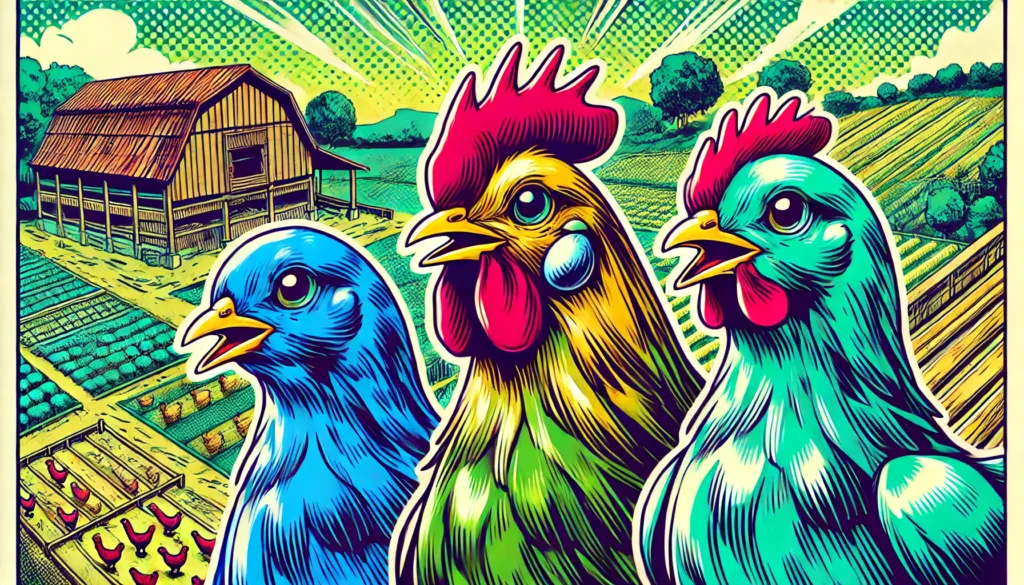
In a study published in iScience, researchers at Queen Mary University of London have taken major steps in better understanding some key questions about learning and intelligence.
Led by Dr. Elisabetta Versace, the team used chicks to try and answer some key unsolved questions related to intelligence (be it biological or artificial).
Called “the masters of fast learning” by Dr. Elisabetta Versace, Senior Lecturer at the School of Biological and Behavioural Sciences, “Chicks learn the features of their mother hen in just a few minutes, and then can recognize them from different points of view and under different lights conditions with no training required.”
Using a mechanism of fast learning called imprinting, the research team discovered that chicks learn faster with artificial mums of some colours over others.
Across four experiments, a total of 587 fresh, domestic chick eggs were incubated in darkness and hatched under controlled conditions.
Newly hatched chicks were sexed and placed in individual cages with a 16:8 hour light-dark cycle.
Their behaviour was observed in rectangular enclosures equipped with high-frequency monitors displaying circular stimuli of different colours.
During the imprinting phase, chicks were exposed to a single moving stimulus for 16 hours.
The test phase occurred on either day 2 or day 6 post-hatching, where chicks were presented with the imprinting stimulus and various test stimuli on separate screens.
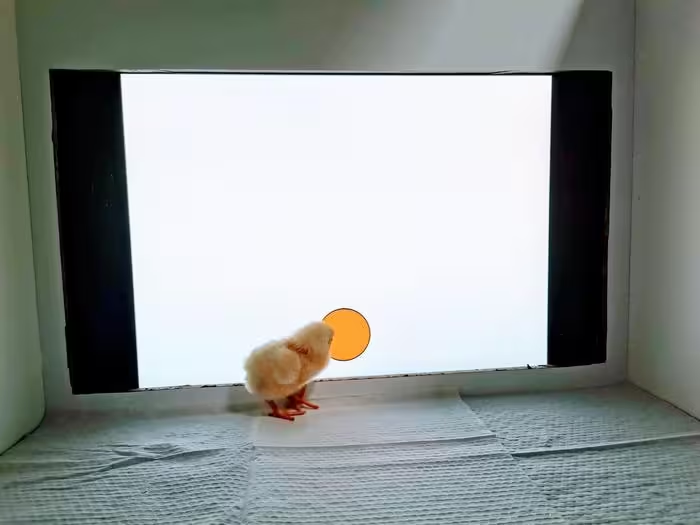
The study revealed a colour-dependent bias in learning speed.
Chicks exposed to a deep blue mother learned the features significantly faster when compared to mothers with colours ranging from blue to turquoise to green.
Chicks raised by a green mother were much slower to distinguish their mother from similar test stimuli.
These findings demonstrate that chicks have a predisposition to learn faster based on specific colour cues, highlighting the influence of both past experiences and innate preferences on learning efficiency.
“What stimuli are chicks prepared to learn faster?” Dr. Versace asks.
“The colours that are rare in their environment, but frequent on the mothers, such as red and blue – colours that are uncommon in natural scenes, but more frequent in the animals.”
These findings open thrilling new possibilities in potentially further understanding how our own brains learn new information and respond to different stimuli.
There is also the potential for this breakthrough to lead to the development of faster and more efficient learning AI, reducing the errors and training by embedding meaningful priors (expectations) in artificial neural networks.
More info
You may also be curious about:
-

Invisible mask: Wearable cold plasma air curtain blocks airborne pathogens
-
Micromachines steered by microorganisms
-

VIDEO: Hydrogen bikes refuel in seconds
-

LUSH science-based shower routine could boost creativity
-

Study reveals environmental impact of artificial sweeteners
-

World’s first colour-changing sunglasses to suit your vibe
-

Engine wear risk as planes swallow more dust waiting to land
-

Stench of a gas giant? Nearby exoplanet reeks of rotten eggs
-

E-JetCycle: Recumbent hydrofoil pedal-assist boat
-
How well do deep-sea animals perform under pressure?
-

Back Up: Wearable tool gives you a third arm to lean on
-

Scientists turn white fat cells into calorie-burning beige fat