
First-of-its-kind technology helps man with ALS ‘speak’ in real time
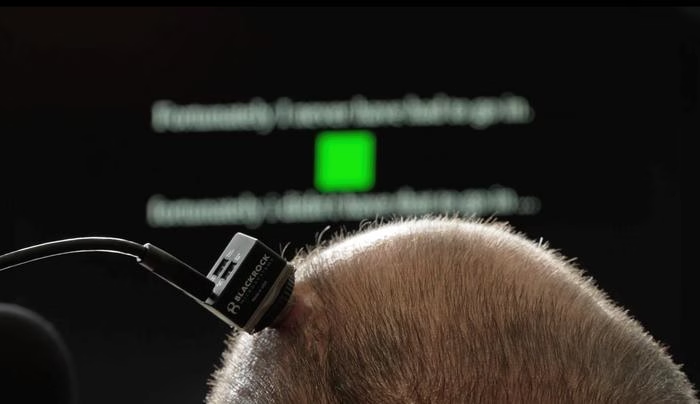
University of California, Davis researchers develop brain-computer interface allowing ALS patient to communicate with expressive intonation.
World’s first non-silicon 2D computer developed
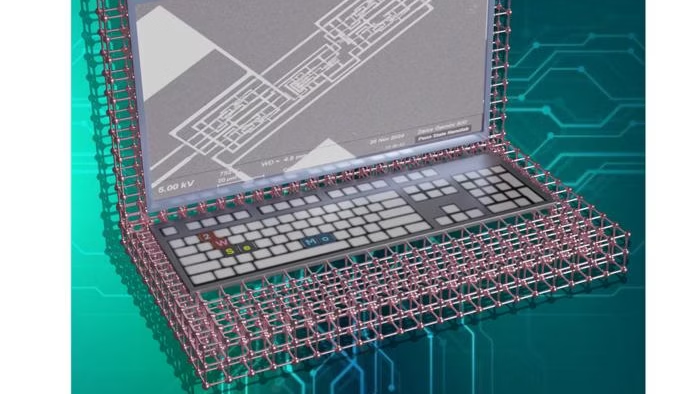
Researchers at Penn State unveil groundbreaking 2D CMOS computer, utilising atom-thick materials for enhanced efficiency.
How the brain solves complicated problems
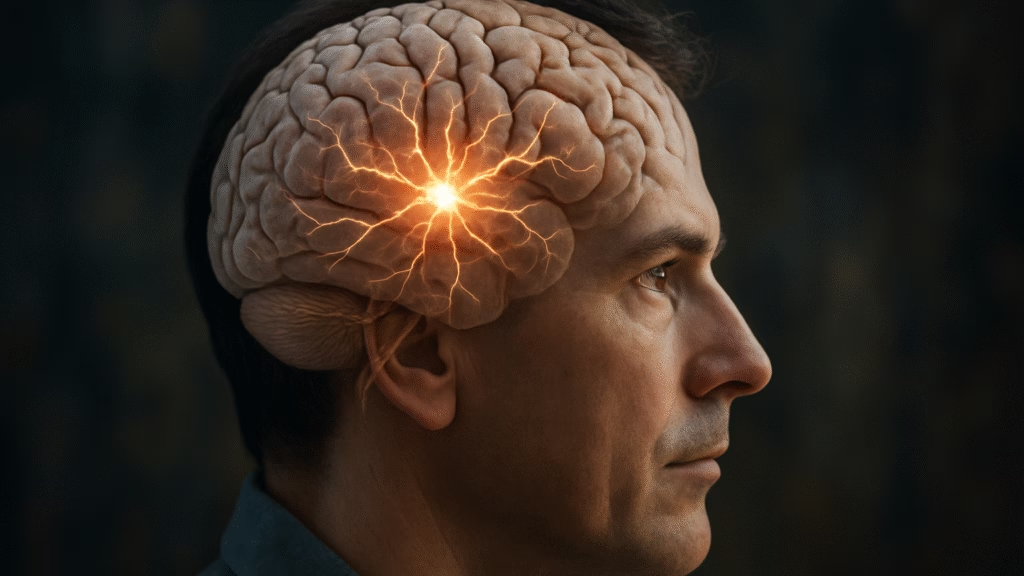
MIT researchers uncover how humans use hierarchical and counterfactual reasoning strategies to navigate complex mental tasks.
Ultrasound scanning robotic arm with adjustable constant contact force
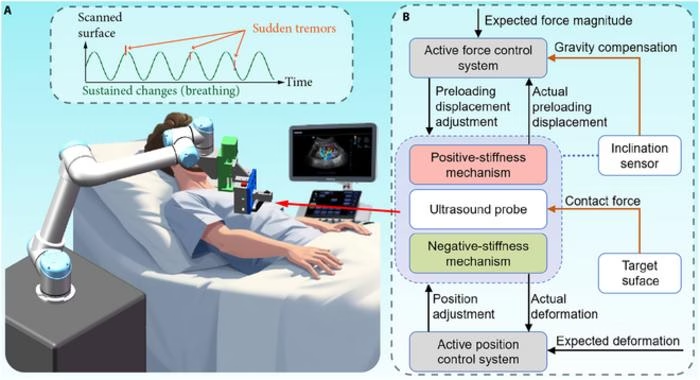
University of Macau’s innovative system enhances diagnostic imaging by stabilising contact force amidst physiological fluctuations.
Understanding the mechanisms of embryonic cell behaviour
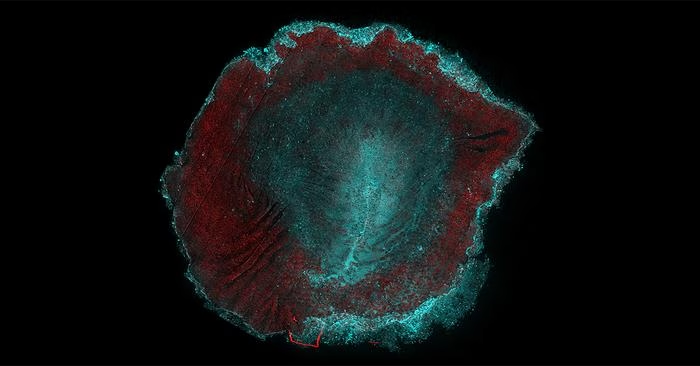
University of California – San Diego reveals avian embryos use modular mechanisms to control size and shape.
Rings of time: unearthing climate secrets from ancient trees

Florida Atlantic University reveals ancient bald cypress trees’ growth patterns, highlighting climate impacts over 1,500 years.
From puck drop to brain pop: Analysing hockey fan reactions
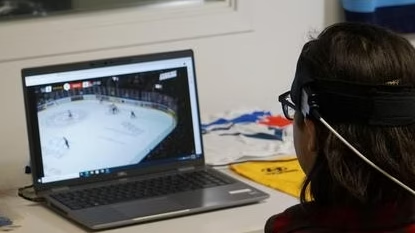
University of Waterloo researchers discover passionate hockey fans’ brains show heightened activity during offensive faceoff moments.
First direct observation of the trapped tsunami waves that shook the world

University of Oxford researchers utilise advanced satellite technology to reveal standing waves caused by Greenland fjord landslides in 2023.
Oxford physicists recreate extreme quantum vacuum effects in simulation

University of Oxford physicists achieve breakthrough with real-time 3D simulations, revealing photon-photon scattering potential in vacuums.
Tiny device spins blood clots away
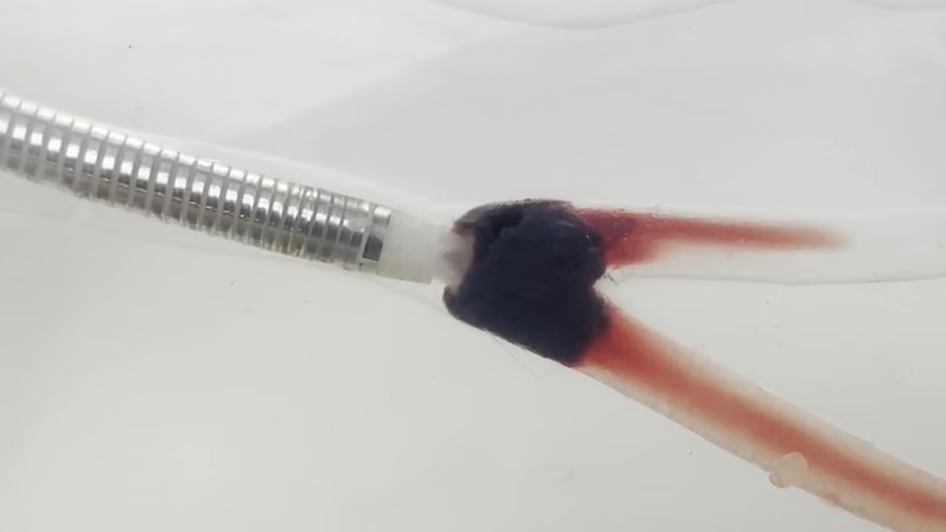
Stanford University develops milli-spinner thrombectomy, doubling clot removal efficacy and offering new hope for stroke patients.