
Among psychologists, AI use is up, but so are concerns

University of Oxford researchers find 92% of psychologists worry about AI’s societal impact and potential data breaches.
AI detects first imaging biomarker of chronic stress

Johns Hopkins University researchers use AI to measure adrenal gland volume, enhancing cardiovascular risk stratification methods.
Stress in the strands: Hair offers clues to children’s mental health

University of Waterloo researchers discover hair cortisol levels can predict mental health risks in chronically ill children.
Our actions are dictated by “autopilot”, not choice, finds new study

University of Surrey research reveals two-thirds of daily actions are habit-driven, challenging conscious decision-making assumptions.
Study linking depression to specific altered brain cells opens door to new treatments

McGill University researchers discover altered gene activity in excitatory neurons and microglia cells, offering innovative treatment possibilities.
Disconnect between brain regions explains why some people don’t enjoy music

University of Barcelona researchers find that genetic factors may account for 54% of music enjoyment variability.
One in five US foods and drinks contain synthetic dyes, study shows

University of North Carolina research reveals synthetic dyes prevalent in children’s products, linked to behavioural issues.
Brains over bots: Why toddlers still beat AI at learning language

Researchers at the Max Planck Institute reveal toddlers’ interactive learning process surpasses AI’s passive data absorption.
Nosey by nature: Chimpanzees and children share a strong curiosity about the lives of others
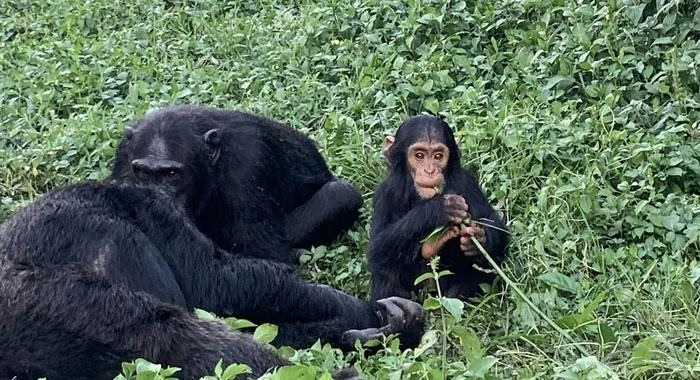
Researchers at the University of California find both species prioritise social interactions, even when foregoing rewards.
International study: AI has little impact on workers’ wellbeing so far, but…

University of Pittsburgh researchers find AI exposure may improve physical health, yet caution against drawing early conclusions.