
Neuroadaptive VR treatment for arachnophobia
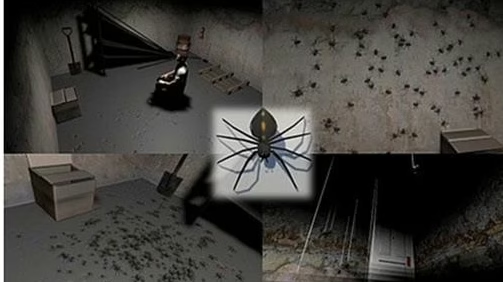
Researchers at TU Graz develop a VR system using EEG data for personalised spider phobia treatment effectiveness.
Changing shower and toilet habits could help close England’s 5 billion litre water gap, Surrey-led research finds
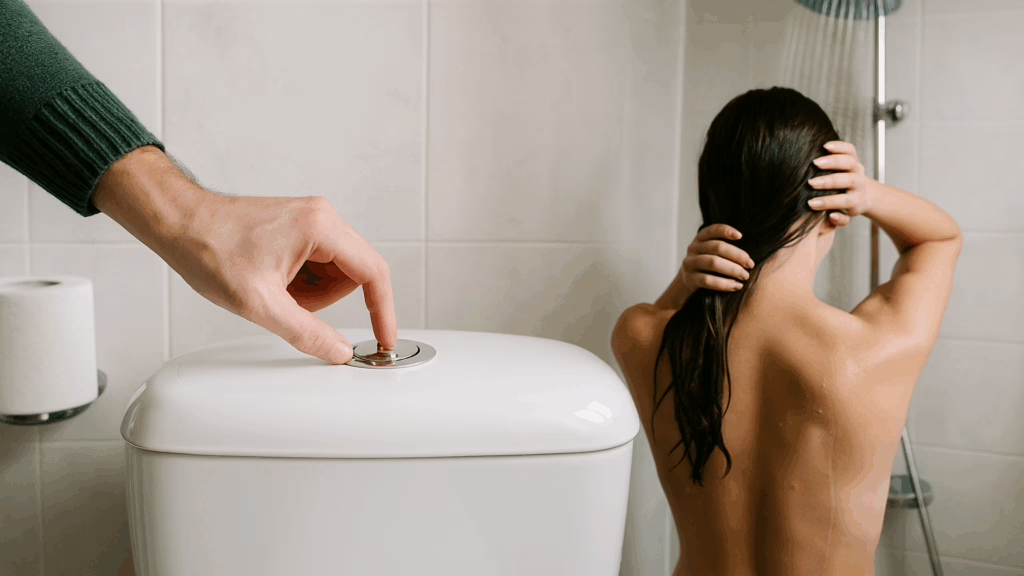
University of Surrey research reveals behaviour change in daily routines could save millions of litres annually.
Bug beats: caterpillars use complex rhythms to communicate with ants

University of Warwick researchers discover caterpillars’ rhythmic signals mimic ant communication, ensuring protection and sustenance.
Dream engineering can help solve ‘puzzling’ questions

Northwestern University researchers found targeted memory reactivation during REM sleep enhances creative problem-solving in dreams.
What ice-fishing competitions reveal about human decision-making

Researchers at the University of Eastern Finland study 16,055 decisions to understand social influence on anglers.
AI learns better when it talks to itself

Researchers at Okinawa Institute of Science and Technology find self-talk enhances AI multitasking and task generalisation abilities.
Creative talent: has AI knocked humans out?

Université de Montréal study reveals AI surpasses average human creativity, yet top human creators still excel.
A robot learns to lip sync

Columbia University engineers develop a robot that learns realistic lip movements through AI and mirror-based learning.
Scientists develop new way to “listen in” on the brain’s hidden language

Researchers at the Allen Institute unveil a protein sensor detecting neurotransmitter signals, enhancing brain communication insights.
AI-assisted device can improve autism care access

Researchers at the University of Missouri explore AI’s role in reducing diagnostic wait times by months.