
Barcelona’s Low Emission Zone reduces NO₂ levels

Research by Barcelona Institute for Global Health shows 15.8% NO₂ reduction, limited effect on particulate matter.
Fiber-optic sensors reveal how farming destroys soil’s natural structure
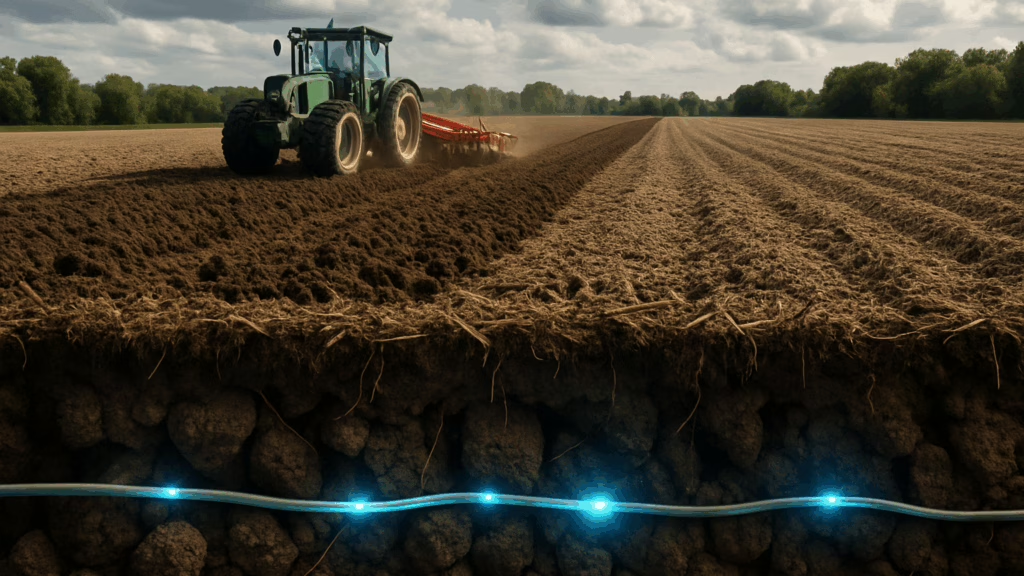
Researchers at the Chinese Academy of Sciences use innovative fibre-optic technology to monitor soil water dynamics.
Scientists turn old rubber gloves into new materials that capture CO2

University of St Andrews researchers transform nitrile-rubber waste into CO2-capturing materials using innovative recycling techniques.
The cactus on your desk is an evolution speed machine

University of Reading researchers discover cacti evolve rapidly, with flower shape changes driving species diversification.
Beavers can convert stream corridors to persistent carbon sinks

Researchers at the University of Birmingham found beaver-engineered wetlands store carbon at ten times higher rates.
Nitrous oxide, a product of fertilizer use, may harm some soil bacteria

MIT researchers discover nitrous oxide disrupts 30% of bacteria, potentially altering microbial communities critical for plant health.
Dangerous thunderstorms: Better models through soil-moisture data

Researchers at TU Wien uncover how soil moisture and atmospheric wind patterns influence thunderstorm formation dynamics.
Improved EV battery technology will outmatch degradation from warmer climate

University of Michigan research shows new EV batteries withstand warmer climates, potentially increasing vehicle lifespans globally.
Proximity to nuclear power plants associated with increased cancer mortality

Harvard T.H. Chan School of Public Health finds older adults most affected, with 115,000 U.S. deaths linked.
New technology could use sunlight to break down ‘forever chemicals’

University of Bath researchers develop carbon-based catalyst, potentially revolutionising detection and removal of persistent PFAS chemicals.