
Turning sawdust into fire-resistant, eco-friendly materials using watermelon seeds
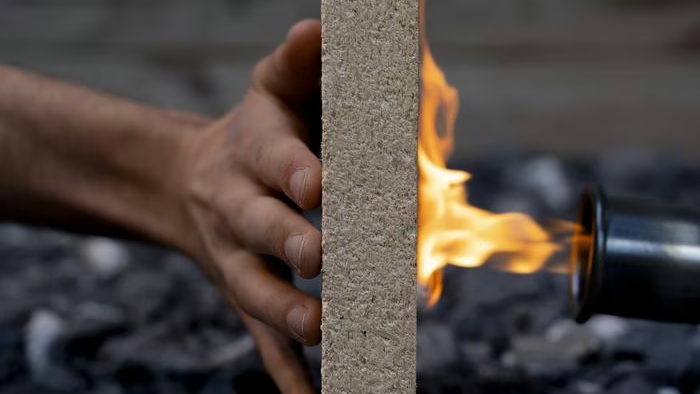
ETH Zurich researchers develop eco-friendly composite from sawdust and struvite, enhancing fire resistance and recyclability.
Self-healing composite can make airplane, automobile and spacecraft components last for centuries

North Carolina State University develops composite with thermoplastic healing agent, extending component lifespan and reducing waste.
Underwater 3D printing could transform maritime construction

Cornell University researchers develop innovative technique using seafloor sediment, advancing eco-friendly maritime infrastructure construction technology.
Can desert sand be used to build houses and roads?

Researchers at the Norwegian University of Science and Technology develop eco-friendly concrete using desert sand and plant additives.
New railway joint to reduce disruptions across the network

Graz University of Technology pioneers robust insulated joints, doubling service life and enhancing railway reliability in Austria.
Scientists engineer unsinkable metal tubes

University of Rochester researchers develop superhydrophobic metal tubes, remaining buoyant despite damage, promising renewable energy applications.
Pompeii offers insights into ancient Roman building technology

MIT researchers uncover self-healing properties of Roman concrete, revealing advanced ancient techniques preserved by Mount Vesuvius’s eruption.
Cooling paint harvests water from thin air

University of Sydney researchers develop energy-free coating, reflecting 97% sunlight, offering sustainable water and cooling solutions.
Mapping the missing green: An AI framework boosts urban greening in Tokyo

Chiba University researchers use AI to identify priority zones for vertical greenery, enhancing urban resilience and equity.
Lighting the way for electric vehicles by using streetlamps as chargers

Penn State researchers retrofit streetlights as EV chargers, enhancing accessibility and reducing installation costs in urban areas.