
Neuroadaptive VR treatment for arachnophobia

Researchers at TU Graz develop a VR system using EEG data for personalised spider phobia treatment effectiveness.
Is your brain aging faster than you are? Sleep may hold the key

University of California, San Francisco research links EEG sleep patterns to dementia risk, highlighting brain age significance.
Direct nervous system link promises more natural leg prostheses

Chalmers University of Technology develops AI-driven implants to decode nerve signals, enhancing control and sensation in prostheses.
Key Alzheimer’s proteins are competing inside brain cells
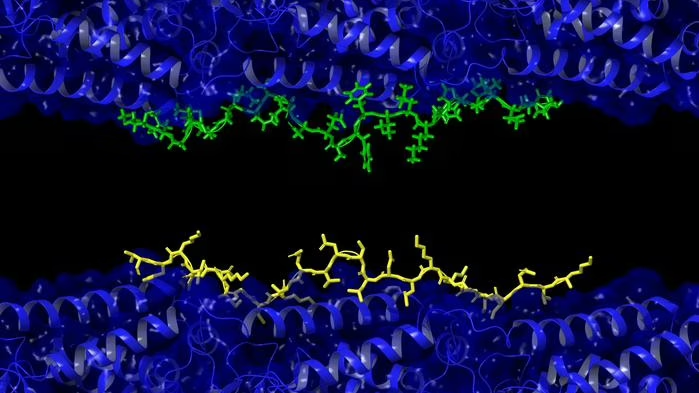
UC Riverside study reveals amyloid beta disrupts tau’s stabilising role, potentially altering Alzheimer’s treatment approaches.
Watching a lifetime in motion reveals the architecture of aging

Stanford University researchers discover early behavioural indicators of lifespan by tracking African turquoise killifish continuously.
Pilot clinical trial suggests low dose lithium may slow verbal memory decline

University of Pittsburgh researchers uncover lithium’s potential to protect against Alzheimer’s in older adults over two years.
Could a hot cup of matcha dial down the ‘sneeze switch’ in hay fever?

Hiroshima University researchers find matcha tea reduces sneezing by suppressing brainstem activity in allergic mice.
Enhanced brain cells clear away dementia-related proteins

Washington University researchers develop innovative CAR-astrocyte therapy, showing potential to reduce Alzheimer’s plaques by 50%.
Using vagus nerve stimulation to treat disease: Review maps today’s science, points to tomorrow’s therapies

University of California – San Diego explores vagus nerve modulation’s potential, highlighting its impact on diverse medical conditions.
Trust your gut to heal your brain

Houston Methodist University researchers discover antibiotics reduce neuroinflammation by altering gut microbiome after traumatic brain injury.