
Are groovy brains more efficient?

University of California, Berkeley researchers find deeper brain grooves enhance connectivity, improving reasoning and cognitive functions.
Fast food: How fatty meals rapidly weaken our gut defences

Researchers at WEHI and Monash University find high-fat meals deplete crucial gut-protective protein IL-22 in mice.
A one-pixel camera for recording holographic movies

Kobe University develops a groundbreaking camera that records 3D holograms through tissues, using high-speed micromirrors.
New technique rapidly measures cells’ density, reflecting health
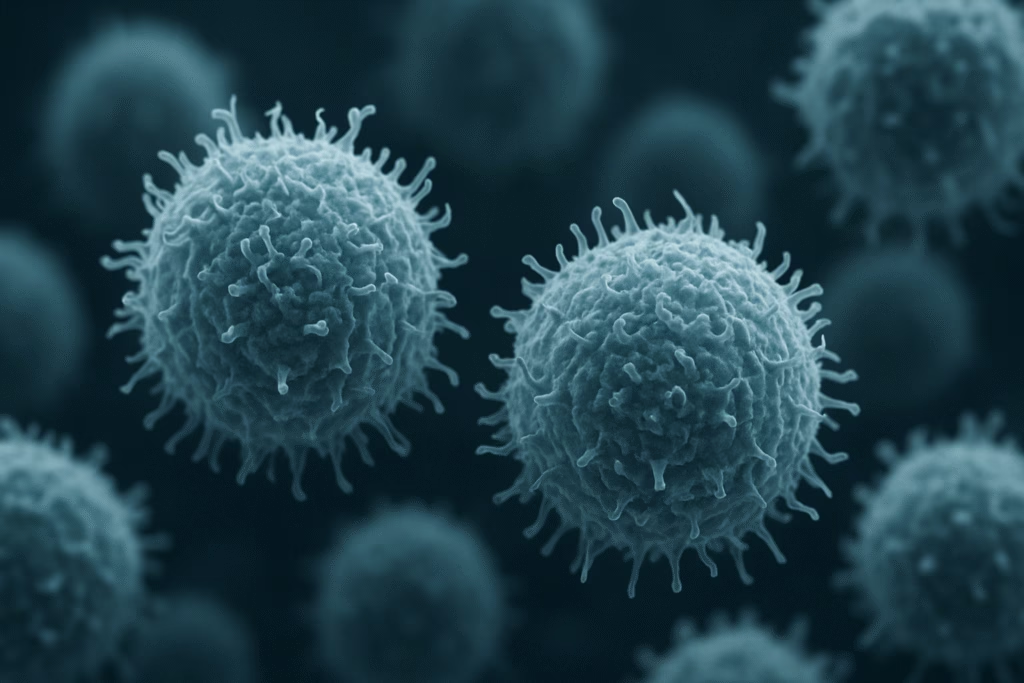
MIT researchers say knowing density will help predict immunotherapy effectiveness and drug response in patients.
Capuchin monkeys develop bizarre “fad” of abducting baby howlers

Researchers from the Max Planck Institute observed the strange animal behaviour on Jicarón Island, Panama, using motion-triggered cameras.
New computer language helps spot hidden pollutants in waterways

UC Riverside researchers develop MassQL, enabling biologists and chemists to identify toxic compounds in environmental samples effortlessly.
Supreme antivenom made from man bitten hundreds of times

Researchers at Stanford University developed universal antivenom using antibodies from hyperimmune donor Tim Friede.
Scientists film mouse heart forming in 3D earlier than ever before

Researchers at UCL and the Francis Crick Institute use advanced light-sheet microscopy to track cardiac cell origins.
Chimpanzees use medicinal leaves to perform first aid
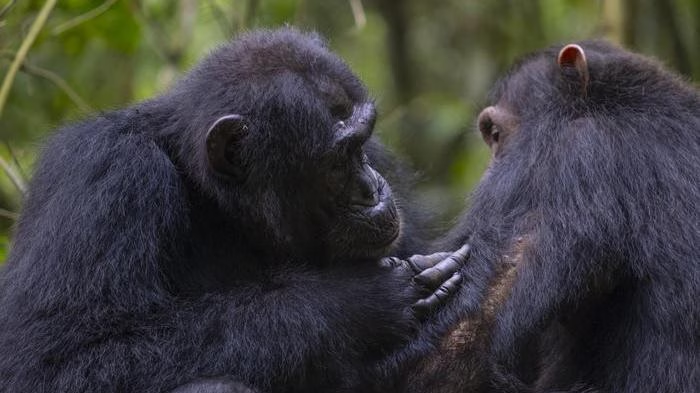
University of Oxford researchers discover chimpanzees in Uganda using plants to treat wounds in their community.
AI tools may be weakening the quality of published research, study warns

University of Surrey researchers highlight concerns over rising low-quality papers, urging improved peer review and statistical oversight.