
Cockroach cyborgs navigate with light-driven helmets

University of Osaka researchers use UV light helmets to steer cockroaches, achieving 94% maze escape success rate.
Capuchin monkeys develop bizarre “fad” of abducting baby howlers
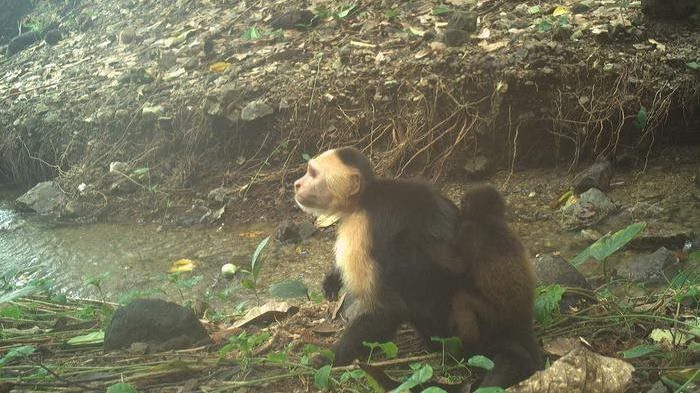
Researchers from the Max Planck Institute observed the strange animal behaviour on Jicarón Island, Panama, using motion-triggered cameras.
Supreme antivenom made from man bitten hundreds of times

Researchers at Stanford University developed universal antivenom using antibodies from hyperimmune donor Tim Friede.
Scientists film mouse heart forming in 3D earlier than ever before

Researchers at UCL and the Francis Crick Institute use advanced light-sheet microscopy to track cardiac cell origins.
Chimpanzees use medicinal leaves to perform first aid
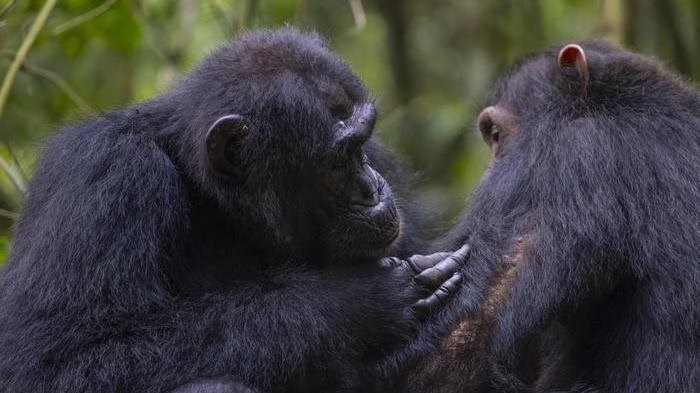
University of Oxford researchers discover chimpanzees in Uganda using plants to treat wounds in their community.
Flamingos create water tornados to trap their prey

Researchers from the University of California, Berkeley, discover flamingos’ unique feeding technique using feet and beaks underwater.
New ocean map reveals migratory patterns to aid wildlife conservation
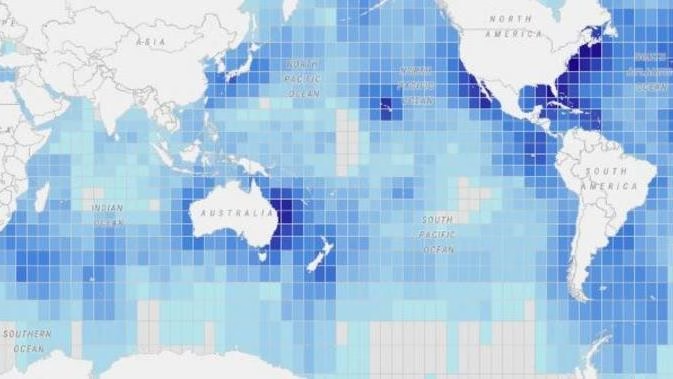
Researchers from the University of Queensland map migratory patterns of marine birds, mammals, turtles and fish for global conservation efforts.
Amphibious robot mimics doggy paddle
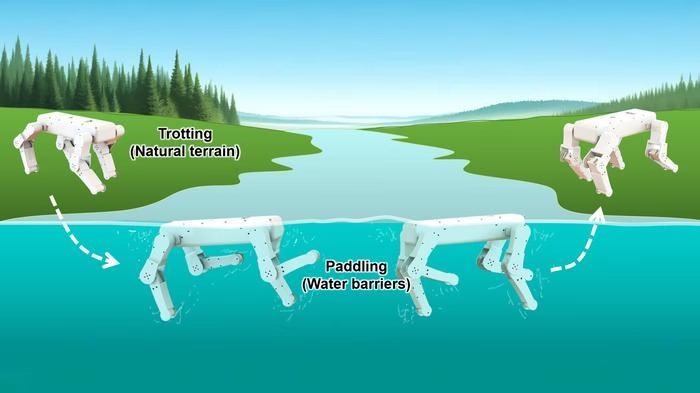
Researchers at South China University of Technology (SCUT) University developed an amphibious robotic dog featuring unique paddling mechanisms inspired by canine swimming.
More social parrots have a better vocabulary
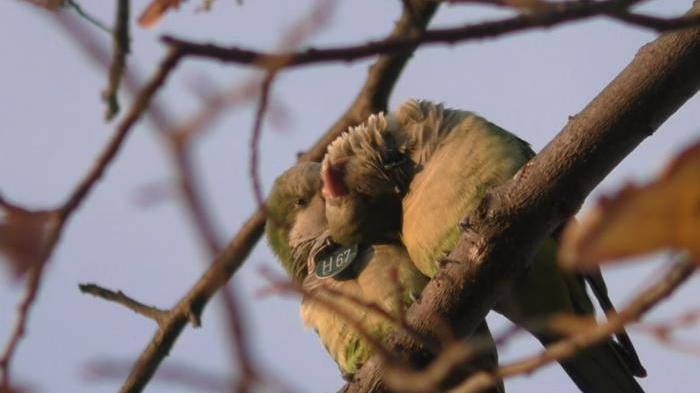
Max Planck Institute researchers find that monk parakeets’ vocal diversity is influenced by their complex social interactions.
Scientists have found a way to ‘tattoo’ tardigrades
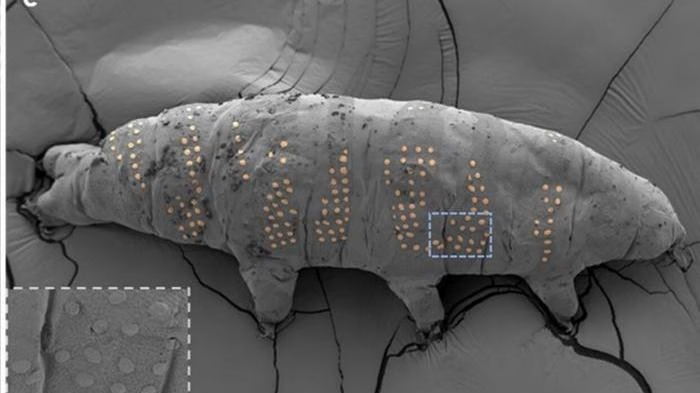
Researchers at Zhejiang University develop innovative microfabrication technique, using ice lithography to create microscopic, biocompatible designs.