
Barcelona’s Low Emission Zone reduces NO₂ levels

Research by Barcelona Institute for Global Health shows 15.8% NO₂ reduction, limited effect on particulate matter.
More power, less heat: How metallic glasses are making motors more efficient
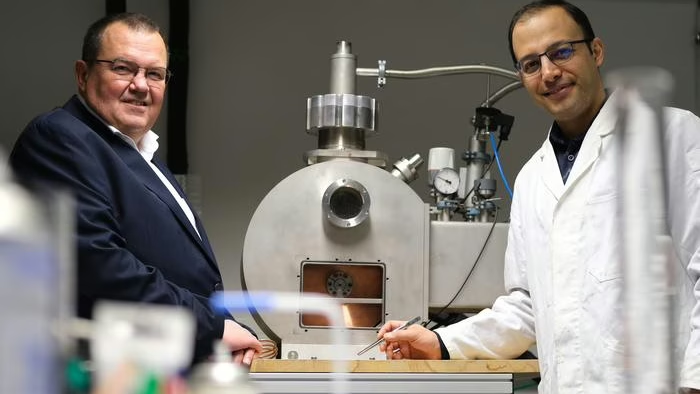
Saarland University researchers develop glass-like alloys, reducing energy losses in electric motors through advanced 3D printing.
EyeDAR: Roadside radar sensors could reduce blind spots for self-driving cars
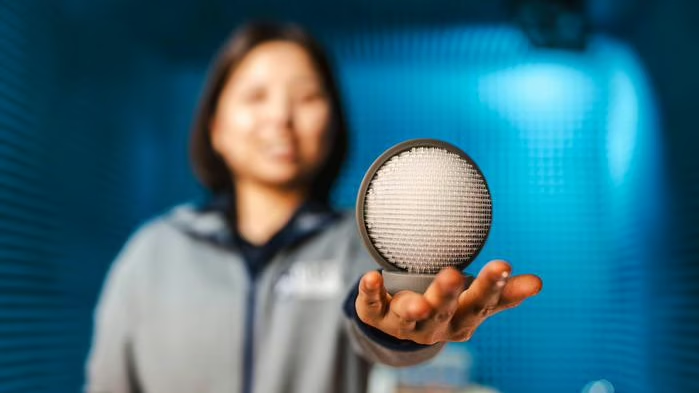
Rice University develops EyeDAR, a compact, low-power radar sensor enhancing AVs’ perception in challenging visibility conditions.
Improving AI models’ ability to explain their predictions

MIT researchers develop a method enhancing AI transparency, using human-understandable concepts for better prediction accuracy.
Could ultrasound help save hedgehogs from road deaths?

University of Oxford researchers find hedgehogs hear ultrasound, paving the way for potential road safety solutions.
Improved EV battery technology will outmatch degradation from warmer climate

University of Michigan research shows new EV batteries withstand warmer climates, potentially increasing vehicle lifespans globally.
Self-healing composite can make airplane, automobile and spacecraft components last for centuries

North Carolina State University develops composite with thermoplastic healing agent, extending component lifespan and reducing waste.
‘Incredibly resilient’ nylon device creates electricity under tonnes of pressure

RMIT University researchers developed a durable nylon film, generating electricity from compression, even after car impact.
How can you rescue a “kidnapped” robot?

Researchers at Miguel Hernández University of Elche develop a LiDAR-based system to tackle robot disorientation challenges.
Humidity-resistant hydrogen sensor can improve safety in large-scale clean energy

Chalmers University of Technology develops a platinum-based sensor, enhancing hydrogen detection in humid environments for safer energy.