
New ocean map reveals migratory patterns to aid wildlife conservation

Researchers from the University of Queensland map migratory patterns of marine birds, mammals, turtles and fish for global conservation efforts.
Spongy device captures drinking water from thin air in emergencies
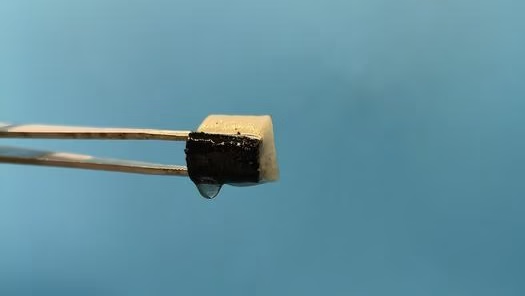
RMIT University engineers develop a solar-powered device using modified balsa wood, effective in diverse humidity levels.
Eco-friendly aquatic robots can be safely eaten by fish
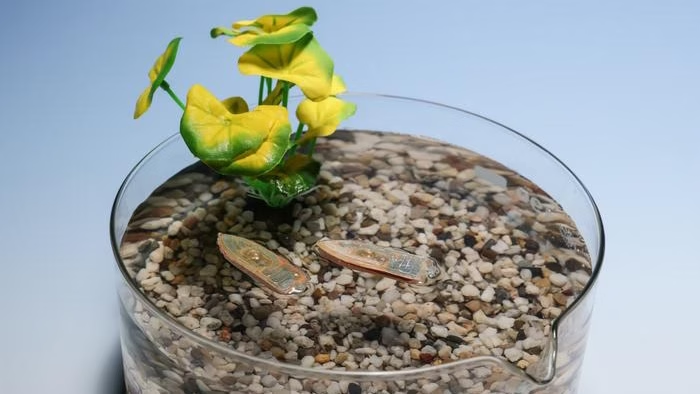
EPFL researchers develop biodegradable, edible robot using Marangoni effect for safe environmental monitoring without harmful polymers.
Feat of ‘dung-gineering’ turns cow manure into one of world’s most used materials

Researchers at University College London develop eco-friendly cellulose production from cow dung, benefiting manufacturers and environment.
Waste to wealth: Pomelo peel can be used for electricity generation and sensing devices
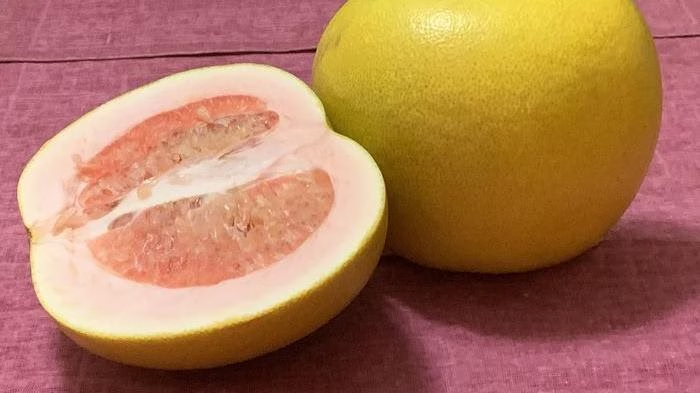
University of Illinois researchers transform discarded pomelo peels into sustainable energy sources, reducing food waste significantly.
Oldest climate record: Scientists extract 1.2-million-year-old ice core
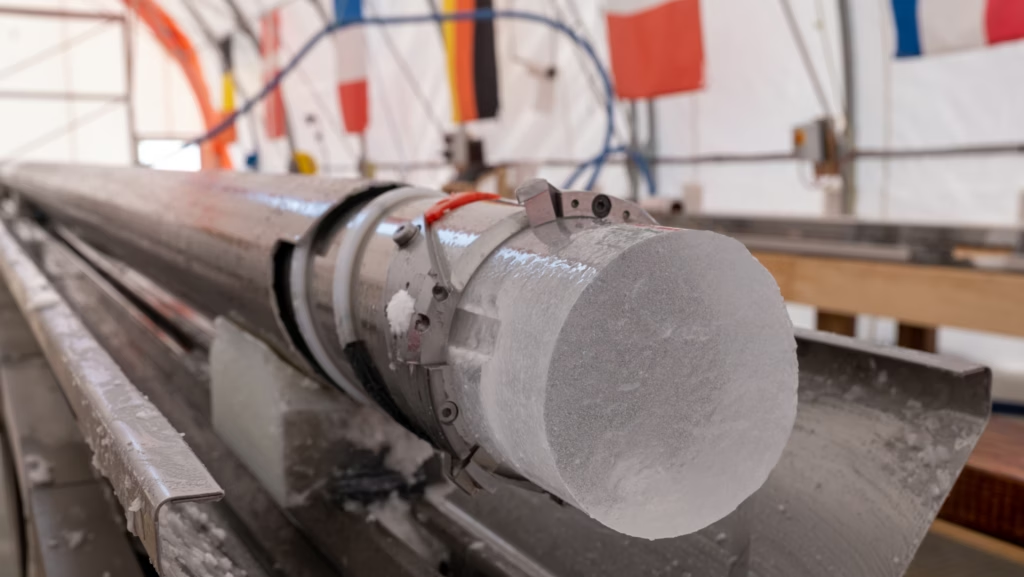
Researchers from Ca’ Foscari University of Venice uncover ancient ice, revealing unprecedented climate data from Earth’s past.
Can fungi turn food waste into the next culinary sensation?

University of California, Berkeley, USA, researchers explore using Neurospora fungi to transform food waste into gourmet dishes, inspired by traditional Indonesian fermentation techniques.
Harnessing green electricity from plant ion hydraulics

Researchers from the Indian Institute of Technology Kharagpur in India have discovered a method to generate sustainable electricity by harnessing the electric potential produced by plants’ ion hydraulics, influenced by their circadian rhythms.
This salt battery harvests osmotic energy where the river meets the sea

Researchers at a university in China have developed a highly efficient, eco-friendly membrane that significantly enhances electricity generation from osmotic energy in estuarine environments.
Rice husk can be used as a promising sustainable packaging material

Researchers have developed eco-friendly films from rice husk nanofibers, marking a significant step towards sustainable material use and circular economy practices.