
First transfer of behaviour between species through single gene manipulation

Nagoya University researchers enable fruit flies to perform novel courtship behaviours by activating specific neural connections.
Magnetically guided nanobots for tooth sensitivity relief

Researchers at Indian Institute of Science develop biocompatible CalBots, offering long-lasting relief by sealing dentinal tubules.
Disconnect between brain regions explains why some people don’t enjoy music

University of Barcelona researchers find that genetic factors may account for 54% of music enjoyment variability.
Long-term exposure to outdoor air pollution linked to increased risk of dementia

University of Cambridge research finds 17% increased dementia risk per 10 μg/m³ PM 2.5 exposure, urging policy changes.
Making medicine out of millipedes

Virginia Tech researchers discover millipede secretions containing alkaloids that modulate neuroreceptors, offering potential neurological disease treatments.
Brains over bots: Why toddlers still beat AI at learning language

Researchers at the Max Planck Institute reveal toddlers’ interactive learning process surpasses AI’s passive data absorption.
Uncovering the role of vitamin C in skin regeneration

Researchers at Tokyo Metropolitan Institute for Geriatrics and Gerontology find vitamin C activates genes for epidermal thickening.
Strategy to prevent age-related macular degeneration identified

Washington University researchers discover cholesterol metabolism link, offering potential new treatments for age-related vision loss. From WashU Medicine 27/06/25 (first released 24/06/25) A new study from Washington University School of Medicine in St. Louis identifies a possible way to slow or block progression of age-related macular degeneration, a leading cause of blindness in people over […]
PET imaging links brain inflammation to speech disorder and Parkinson-like syndrome
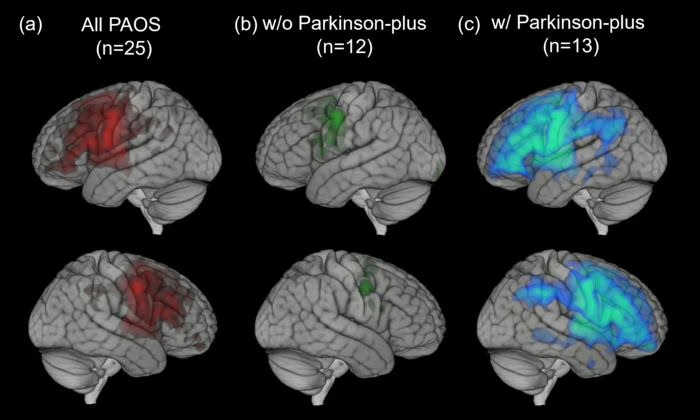
Mayo Clinic researchers discover neuroinflammation patterns in PAOS patients, unveiling potential for early diagnosis and treatment.
Virtual reality could help stroke survivors regain movement

Flinders University researchers find VR therapy increases rehabilitation time, slightly improving arm function and balance for stroke survivors.