
Okra, fenugreek extracts remove up to 90% of microplastics from water

Tarleton State University researchers discover plant extracts as biodegradable alternatives, achieving up to 90% microplastic removal.
No-sort plastic recycling is near with new catalyst

Northwestern University researchers develop a nickel-based catalyst to simplify recycling mixed polyolefin plastics, enhancing efficiency.
Fluorescent bacteria ‘shine a light’ on microplastic pollution

Researchers at the National University of Singapore develop biosensors using Pseudomonas aeruginosa to detect microplastics efficiently.
Reusable ‘jelly ice’ keeps things cold — without meltwater

University of California, Davis researchers develop compostable gelatin-based cooling material, reducing contamination risks in food supply.
Recycled plastics can affect hormone systems and metabolism
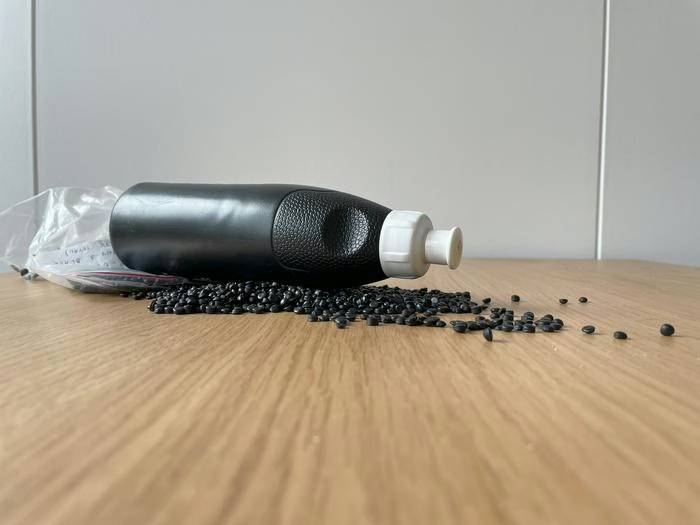
University of Gothenburg study reveals over 80 chemicals in recycled plastics, impacting zebrafish larvae health significantly.
Plastic bag bans: Study finds up to 47% drop in shoreline bag litter

University of Delaware study reveals long-term effectiveness of plastic bag policies in reducing marine litter.
‘Eco-friendly’ plant-based plastics linked to organ damage

Researchers at Zhejiang University discover liver damage and gut imbalances in mice from biodegradable starch plastics exposure.
Novel hydrogel removes microplastics from water

Researchers at the Indian Institute of Science in India have developed a sustainable hydrogel that effectively removes microplastics from water using UV light.
World’s first flushable period pad

From Superinnovators 18/12/23 Imperial College London spin out company Fluus has developed the world’s first flushable period pad with zero microplastics and toxins. The pad consists of top and bottom sheets made from plant fibres, an absorbent core and barrier made from biodegradable polymers, and a non-toxic, plastic-free adhesive derived from tree sap. The product […]
Bit by bit, microplastics from tyres are polluting our waterways

From Griffith University 07/09/23 Urban stormwater particles from tyre wear were the most prevalent microplastic a new Griffith-led study has found. Published in Environmental Science & Technology, the study showed that in stormwater runoff during rain approximately 19 out of every 20 microplastics collected were tyre wear particles with anywhere from 2 to 59 particles […]