
Top AI coding tools make mistakes one in four times

University of Waterloo research reveals AI’s 75% accuracy in structured outputs, highlighting need for human oversight.
Pilot clinical trial suggests low dose lithium may slow verbal memory decline

University of Pittsburgh researchers uncover lithium’s potential to protect against Alzheimer’s in older adults over two years.
Bug beats: caterpillars use complex rhythms to communicate with ants

University of Warwick researchers discover caterpillars’ rhythmic signals mimic ant communication, ensuring protection and sustenance.
AI learns better when it talks to itself

Researchers at Okinawa Institute of Science and Technology find self-talk enhances AI multitasking and task generalisation abilities.
Creative talent: has AI knocked humans out?

Université de Montréal study reveals AI surpasses average human creativity, yet top human creators still excel.
A robot learns to lip sync

Columbia University engineers develop a robot that learns realistic lip movements through AI and mirror-based learning.
Scientists develop new way to “listen in” on the brain’s hidden language

Researchers at the Allen Institute unveil a protein sensor detecting neurotransmitter signals, enhancing brain communication insights.
Ancient lead exposure shaped evolution of human brain

Southern Cross University research reveals two million years of lead exposure influenced hominid brain development and language.
Brains over bots: Why toddlers still beat AI at learning language

Researchers at the Max Planck Institute reveal toddlers’ interactive learning process surpasses AI’s passive data absorption.
PET imaging links brain inflammation to speech disorder and Parkinson-like syndrome
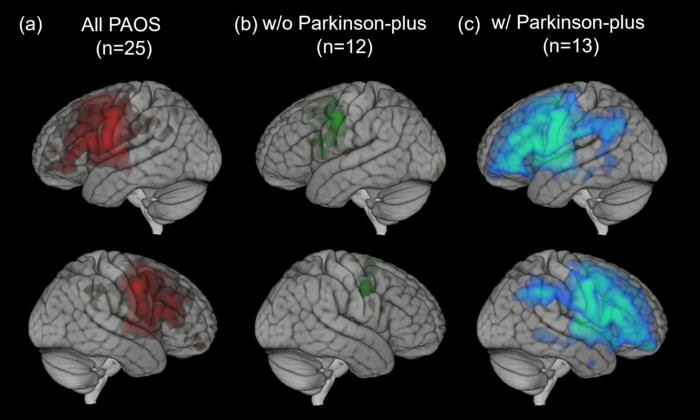
Mayo Clinic researchers discover neuroinflammation patterns in PAOS patients, unveiling potential for early diagnosis and treatment.