
Scientists create test to predict chemotherapy resistance in patients

University of Cambridge researchers develop genomic test, improving personalised treatment by identifying chemotherapy-resistant cancer patients.
New method enables in vivo generation of CAR T cells to treat cancer and autoimmune disease

Researchers at Cambridge University develop targeted lipid nanoparticles to enhance CAR T cell delivery and efficiency.
Scientists use AI to make green ammonia even greener

University of New South Wales researchers achieve sevenfold improvement in ammonia production efficiency using AI-optimised catalysts.
A building material that lives and stores carbon

ETH Zurich develops innovative material incorporating cyanobacteria, capable of sequestering more carbon than typical biological methods.
Researchers convert urine into bone implant material
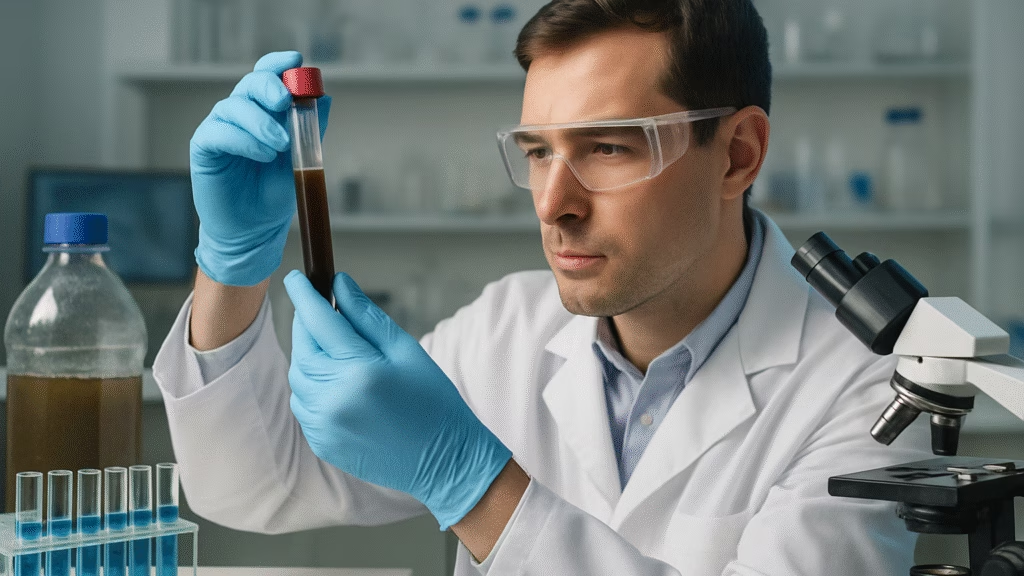
University of California, Irvine scientists develop eco-friendly process transforming urine into valuable dental and bone implants.
Ear wax could help screen for Parkinson’s disease

Researchers at Zhejiang University discover unique ear wax biomarkers, offering a cost-effective early Parkinson’s detection method.
AI paves the way towards green cement

Researchers at Paul Scherrer Institute develop AI model reducing cement emissions by optimising formulations for sustainability.
Pasteurizing fruit smoothies could improve digestion of beneficial polyphenols
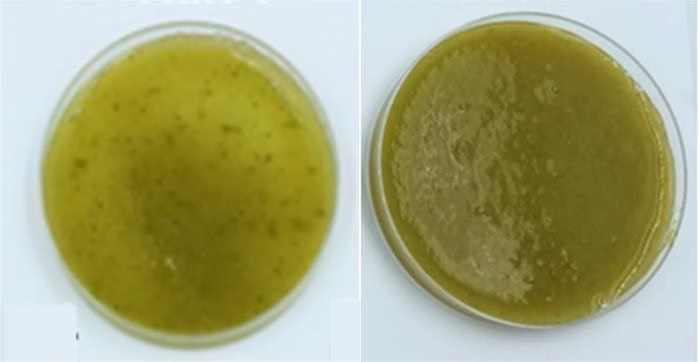
University of Navarre researchers find high-temperature pasteurisation increases polyphenol absorption by gut microbiome by 44%.
Methanol poisoning could be easily detected with a ‘breathalyzer’ sensor
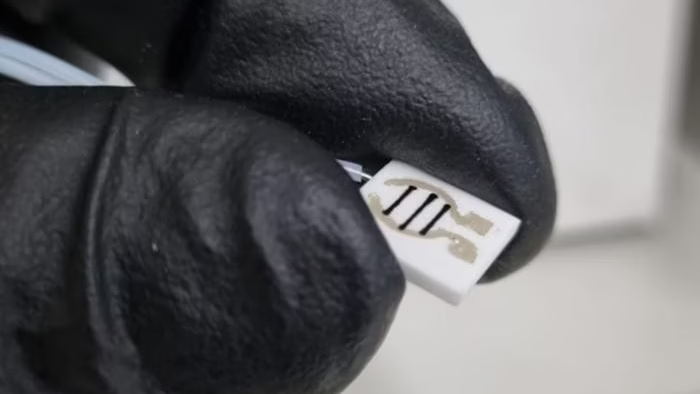
University of Adelaide researchers develop innovative sensor using graphene, detecting methanol at 50 parts per billion.
New sodium fuel cell could enable electric aviation
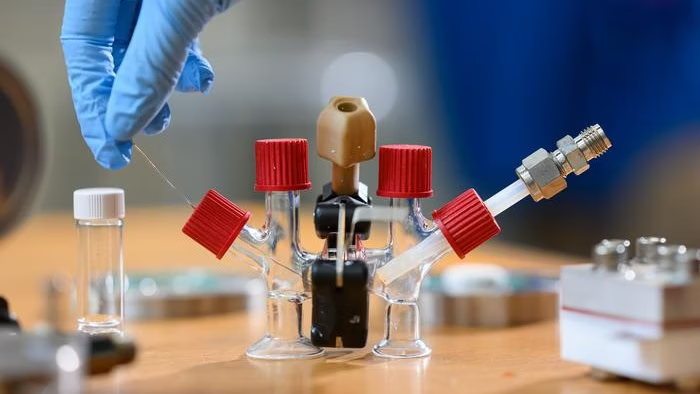
MIT researchers develop sodium-air fuel cells offering triple the energy density of current lithium-ion batteries.