
New genetic analysis predicts risk of adult obesity from childhood

University of Bristol researchers analyse genetic data from over five million people to help calculate risk of going on to live with obesity.
Less pain, more gain: A new recipe for safer, stronger mRNA vaccines

University of Pennsylvania researchers use olive oil’s anti-inflammatory secret to improve mRNA therapies.
Regrowing hearing cells: New gene functions discovered in zebrafish

Stowers scientists identify specific genes involved in zebrafish sensory hair cell regrowth that could inform future hearing loss treatment.
Innovative liquid biopsy test uses RNA to detect early-stage cancer

UChicago researchers have developed a new liquid biopsy test that uses RNA modifications to detect early-stage colorectal cancer with 95% accuracy.
Artificial intelligence identifies anti-aging drug candidates targeting ‘zombie’ cells

Researchers from MIT and Integrated Biosciences discover three potent senolytic compounds with high oral bioavailability.
Ocean ‘greening’ at poles could spell changes for fisheries

Duke University researchers find polar phytoplankton increase may impact global carbon cycle and equatorial fisheries.
Uncovering the role of vitamin C in skin regeneration

Researchers at Tokyo Metropolitan Institute for Geriatrics and Gerontology find vitamin C activates genes for epidermal thickening.
Strategy to prevent age-related macular degeneration identified

Washington University researchers discover cholesterol metabolism link, offering potential new treatments for age-related vision loss. From WashU Medicine 27/06/25 (first released 24/06/25) A new study from Washington University School of Medicine in St. Louis identifies a possible way to slow or block progression of age-related macular degeneration, a leading cause of blindness in people over […]
Killer whales groom each other using tools made from kelp

Researchers at the University of Washington find endangered killer whales create kelp tools for social grooming.
Pharaoh’s curse fungus turned into anti-cancer drug
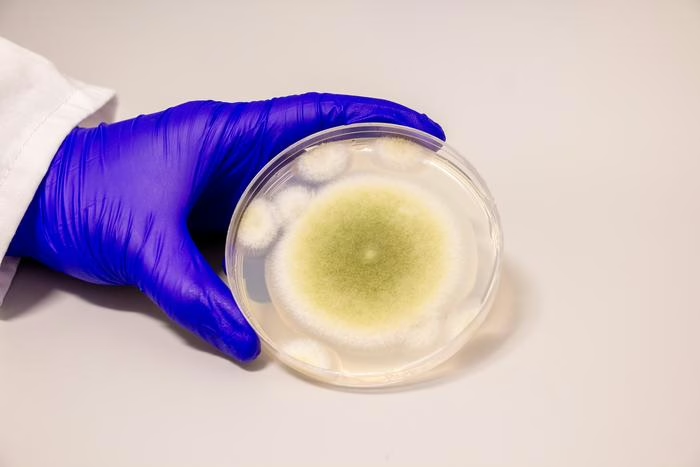
University of Pennsylvania researchers harness ancient tomb fungi, developing promising compounds targeting leukaemia with enhanced potency.