
How light can vaporize water without the need for heat

Researchers at MIT in the United States have discovered that light, not just heat, can cause water to evaporate, revealing new insights into light-water interactions.
Geologists discover rocks with the oldest evidence yet of Earth’s magnetic field

Researchers at MIT in the USA and Oxford University in the UK have discovered ancient rocks in Greenland that could extend the known timeline of Earth’s magnetic field.
VIDEO: Helium balloon drones

Germany-based H-Aero have developed bi-propeller helium balloon drones for long duration, energy efficient flight, with the largest model boasting a 3 kg sensor payload and 5 hr flight time.
Zap Energy achieves 37-million-degree temperatures in a compact device
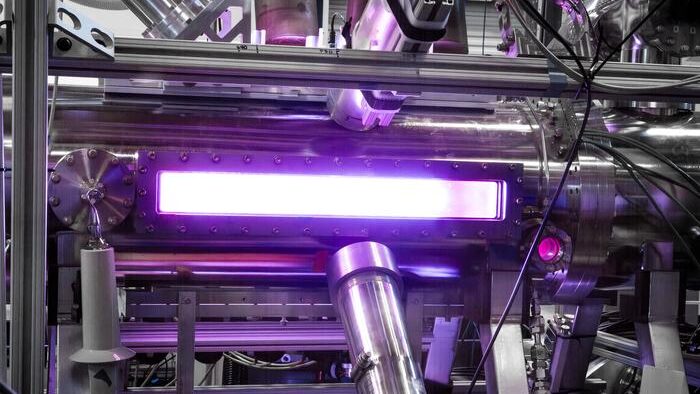
Researchers at the University of Washington in the United States have developed a mini fusion reactor that dramatically surpasses existing plasma temperature milestones.
Laser-treated cork absorbs oil for carbon-neutral ocean cleanup

Researchers at Central South University and Huazhong University of Science and Technology in China have developed an innovative, eco-friendly cork-based solution for marine oil spill clean-up.
World’s chocolate supply threatened by devastating virus

Researchers at The University of Texas at Arlington, USA, are developing mathematical models to combat a virus threatening global chocolate production from cacao trees in Ghana.
VIDEO: First human vs AI fighter pilot dogfight
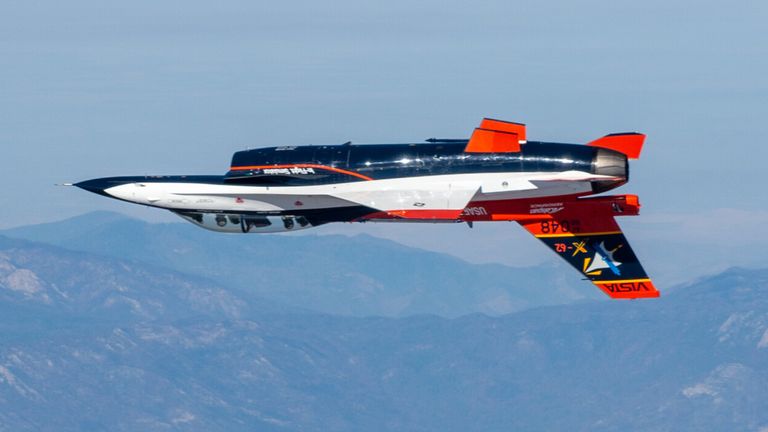
DARPA and USAF have tested an AI flying a modified F-16 test aircraft known as the X-62A against a human-piloted F-16 within visual range combat scenarios, over Edwards Air Force Base, California.
No bull: How creating less-gassy cows could help fight climate change

A study by Curtin University in Australia explores reducing methane emissions by breeding less-flatulent cows and restoring land in the beef and dairy sectors.
Predicting cardiac arrhythmia 30 minutes before it happens

Researchers at the University of Luxembourg, based in Luxembourg, have developed an AI model that predicts atrial fibrillation, potentially integrating with wearable technology for early detection.
Breakthrough rice bran nanoparticles show promise as affordable and targeted anticancer agent

Researchers at Tokyo University of Science in Japan are developing nanoparticles from rice bran to target cancer cells more safely and effectively than traditional therapies.